Boston
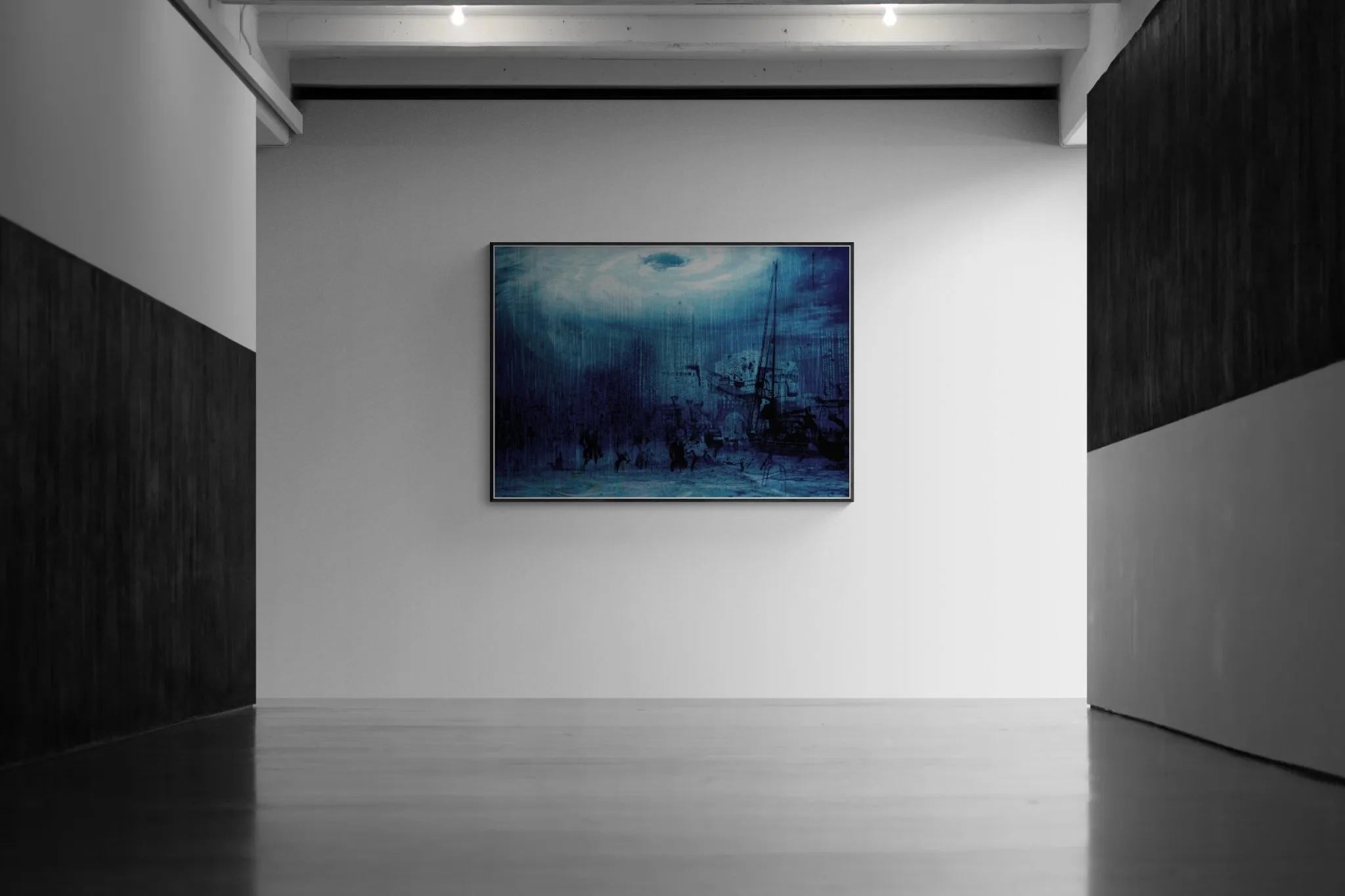
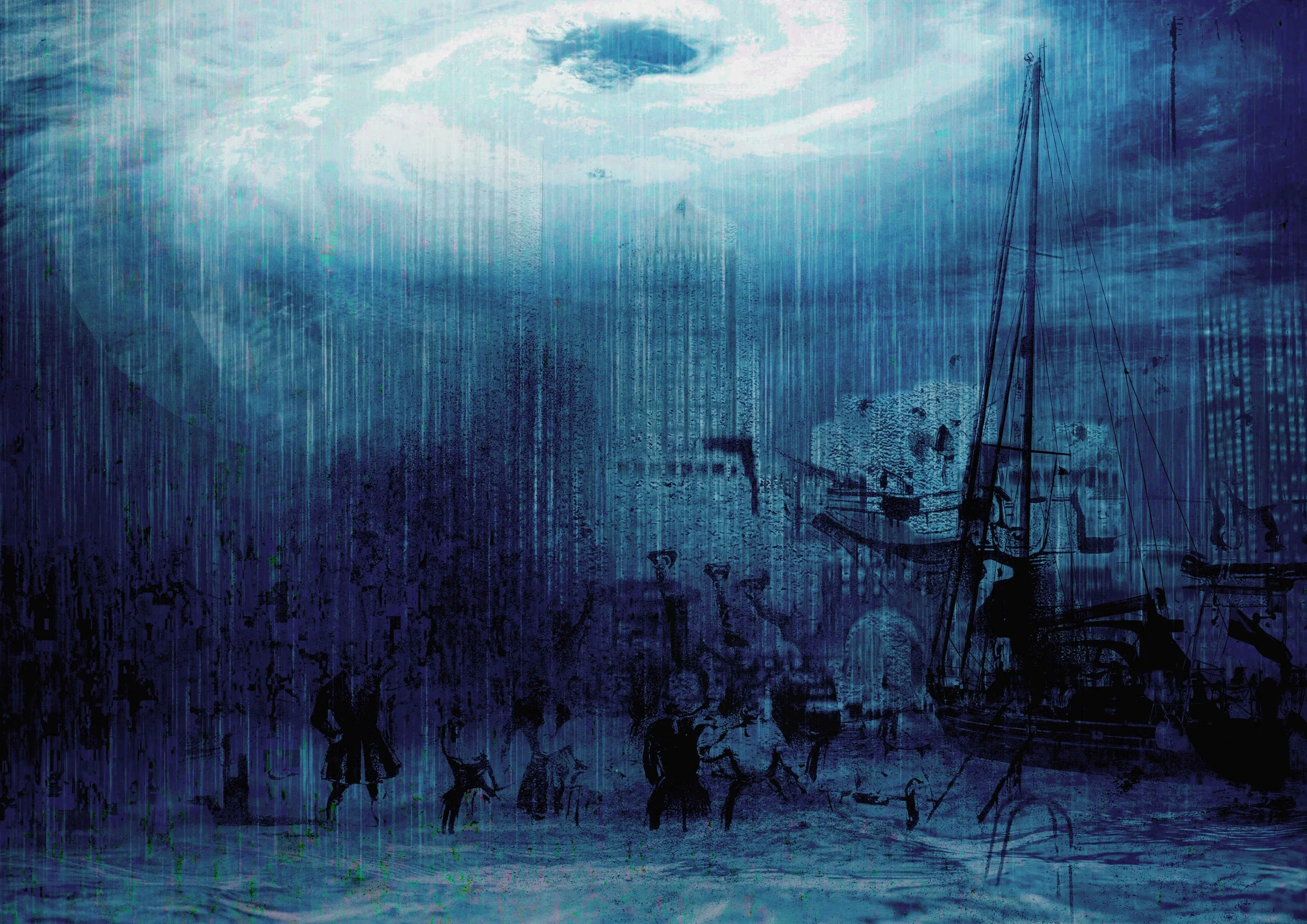
Boston appears to belong to the present, yet the harbor has opened a breach in time. On a rainy evening, with modern buildings darkened and only a turbulent sky catching light from above, the participants of the 1773 Tea Party return as ghostly presences. They do not appear as historical reenactors or nostalgic memories. They rise as if the old act of resistance has remained inside the city itself, waiting for the right conditions to surface again.
What gives the scene its force is not merely the meeting of past and present, but the suggestion that rebellion can recur whenever history is unfinished. The harbor becomes a threshold where civic memory takes form, and the modern city briefly loses its certainty. The destination of these apparitions is unclear, yet their purpose is unmistakable: to repeat defiance in another age. Rain seals the scene in a suspended, watchful, almost judicial atmosphere.