
City
Figuration in Matter
City Series – Click Image for Details
City begins with the visible city, but its subject extends beyond physical place. The series explores two interconnected realities: parallel worlds that emerge when familiar spatial laws no longer hold, and the afterimages of memory, where fragments of places and moments remain long after their original contexts have faded.
In some works, an ordinary urban scene becomes a passage into another dimension. Familiar streets, buildings, and objects remain recognizable, yet their relationships are transformed into situations that could never occur in everyday reality. In others, the city appears through the afterimages of memory. Certain details remain vivid while others dissolve, allowing different moments and places to coexist within an unstable space.
To preserve the connection to an actual place, each work is constructed from photographic elements originating from that same location. These photographs act as evidence of what truly exists. By collaging, layering, erasing, and recombining them, I alter their relationships while retaining their connection to reality. The individual elements are real; the reality they form together is not.
City does not invent imaginary places. It reconstructs actual ones from within, revealing parallel worlds and the lingering afterimages of memory. Each work develops from the particular character of its location, transforming the familiar into a reality that could exist only within that place, yet never in the world as we know it.
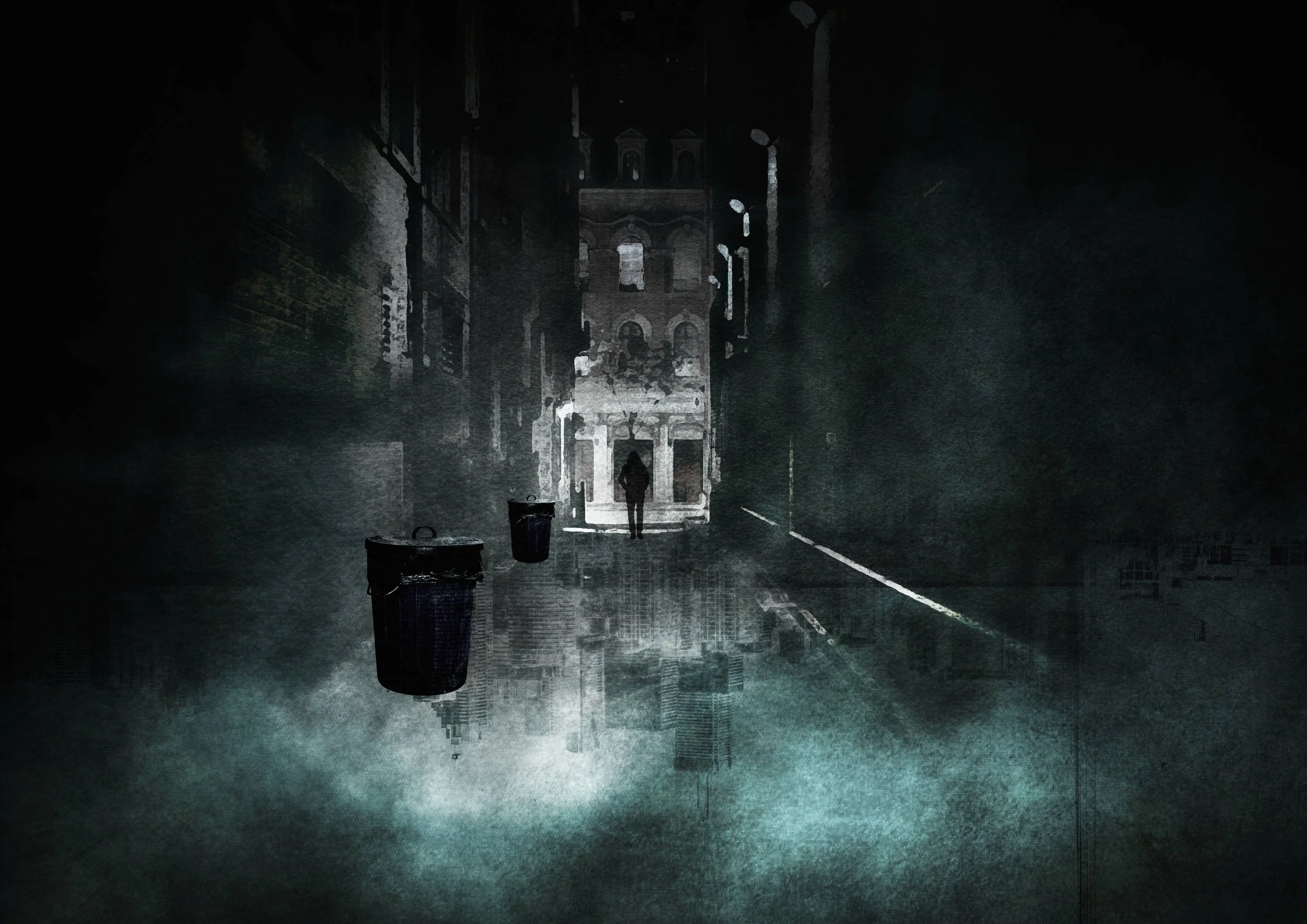
Toronto folds separate moments into one unstable space, where a floating trash bin, a solitary figure, and a reflected city unsettle gravity, chronology, and the boundaries of ordinary reality itself.
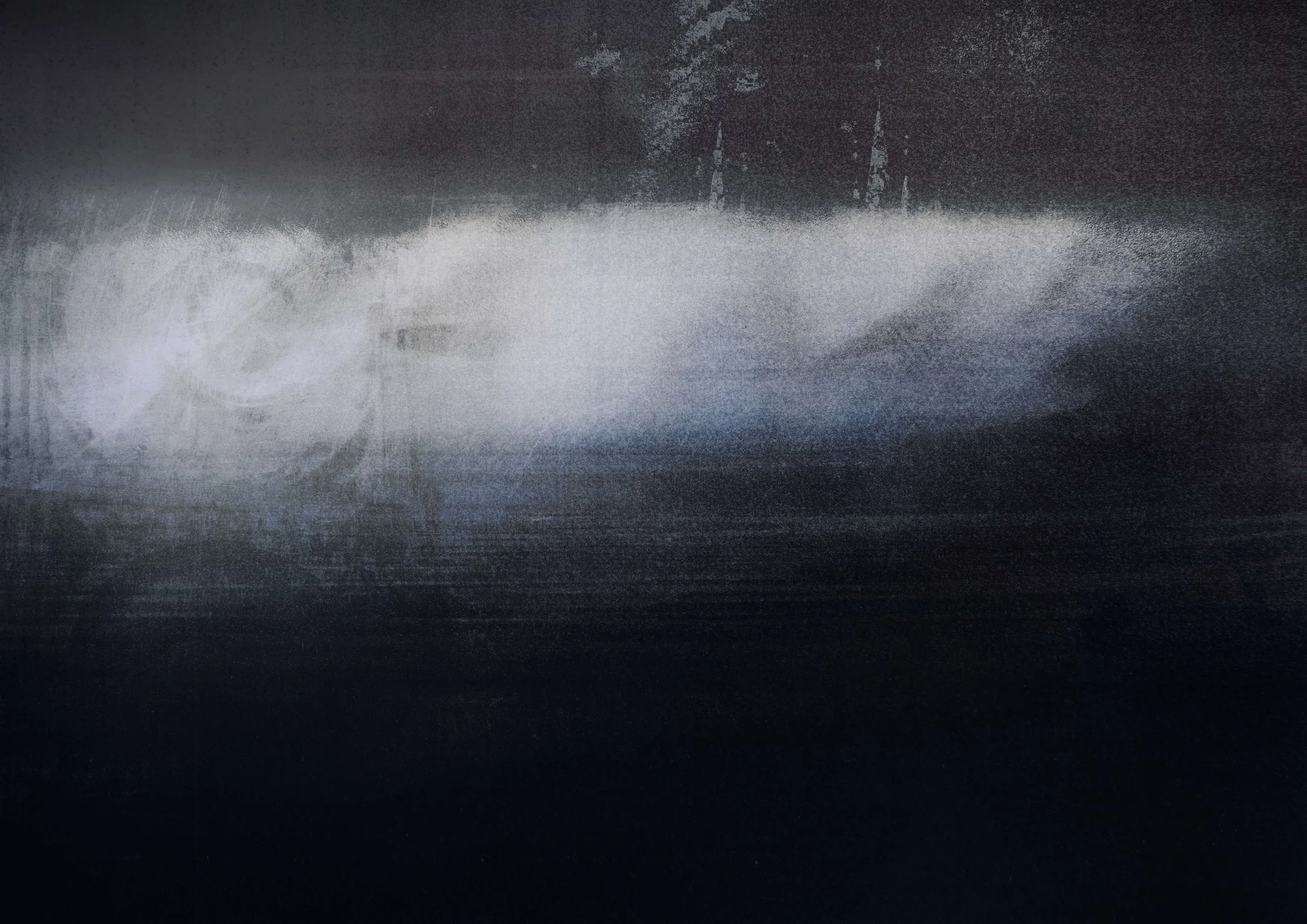
Prague explores how a city survives unevenly in memory, preserving vivid fragments while streets, buildings, and connections fade, leaving a place reconstructed through remembrance rather than continuous physical reality itself.
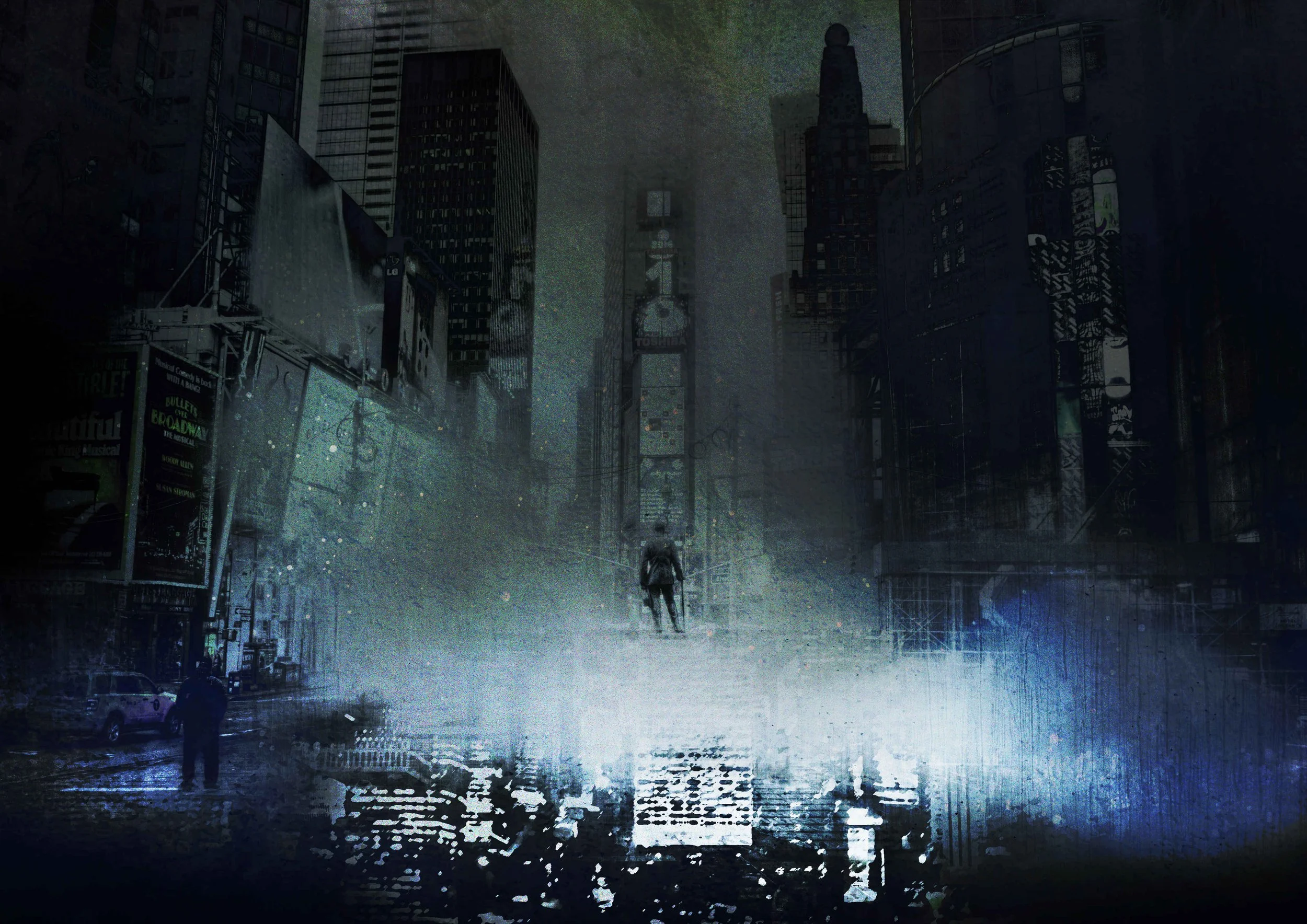
In blackout, material NYC meets a virtual NYC emitting light from another dimension. Residue from material civilization drifts near the ground, while the real city emerges like a mirror image.
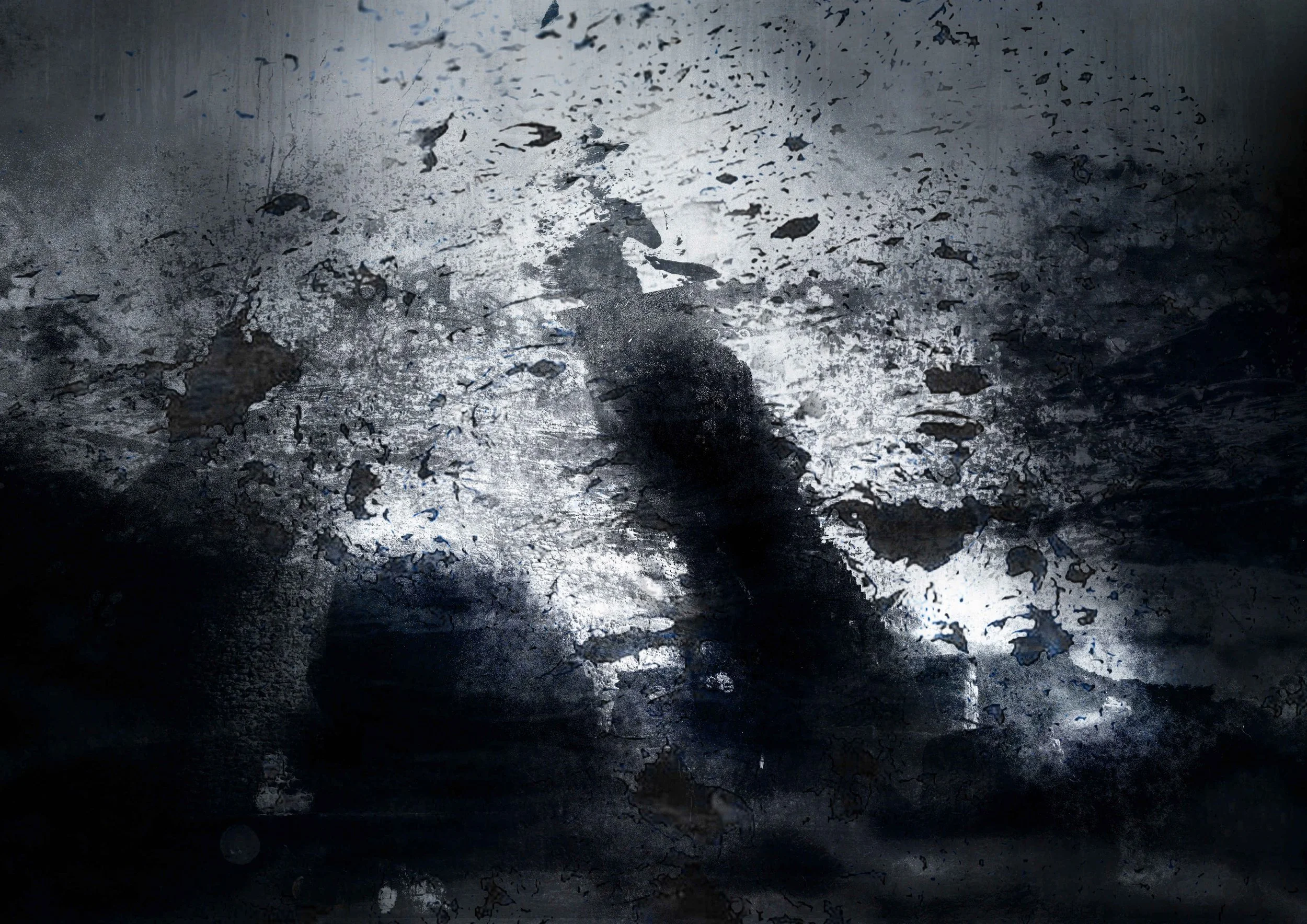
As a Yucatán pyramid disintegrates in the transition to another dimension, its fragments hover ambiguously between worlds. Only the staircase remains, crossing an unfamiliar medium like a path over water toward an unknown realm.
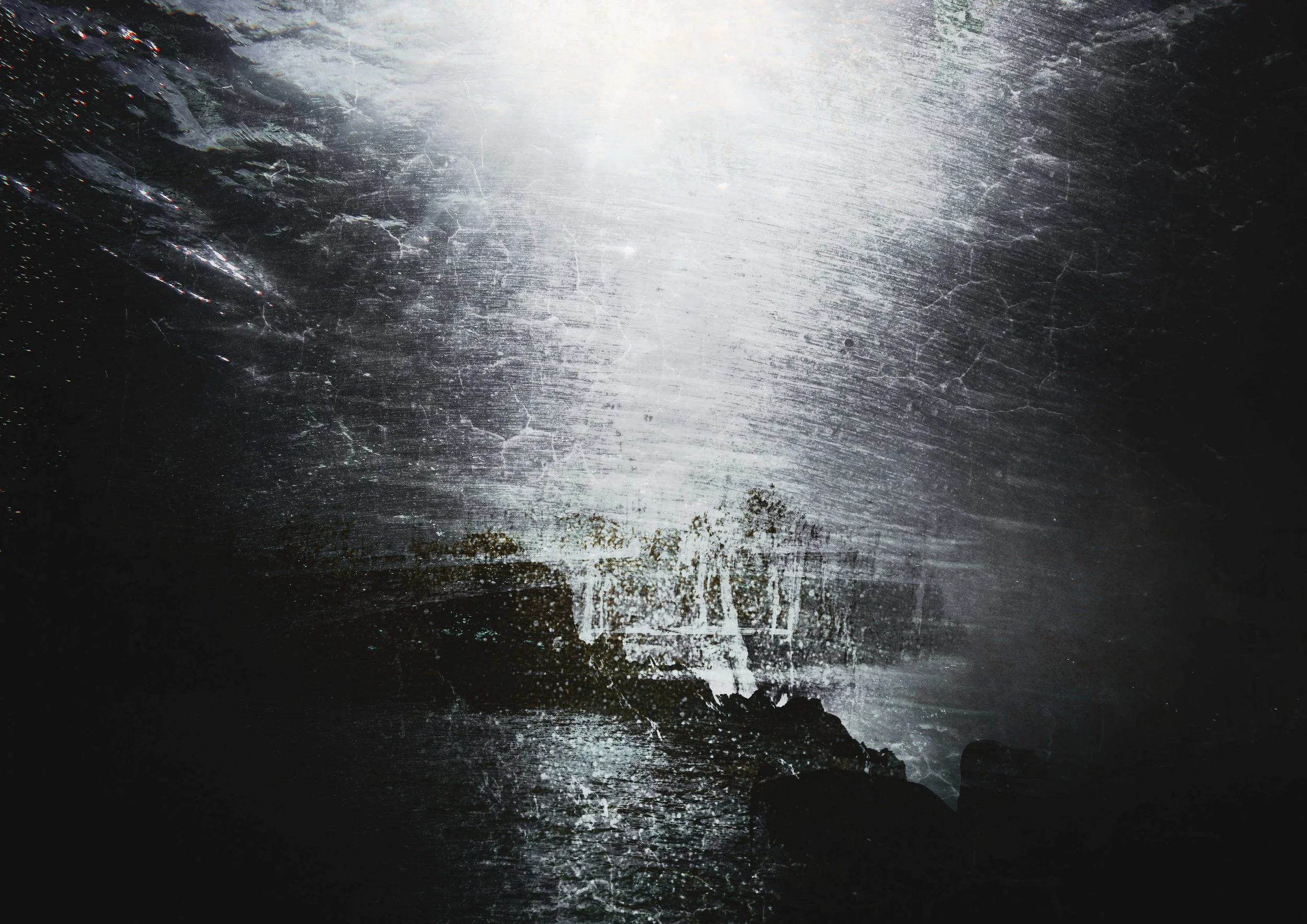
Pont Alexandre III appears unstable, almost collapsing, as a forceful light descends like lightning. Nature does not illuminate the city; it confronts, penetrates, and unsettles its constructed order.
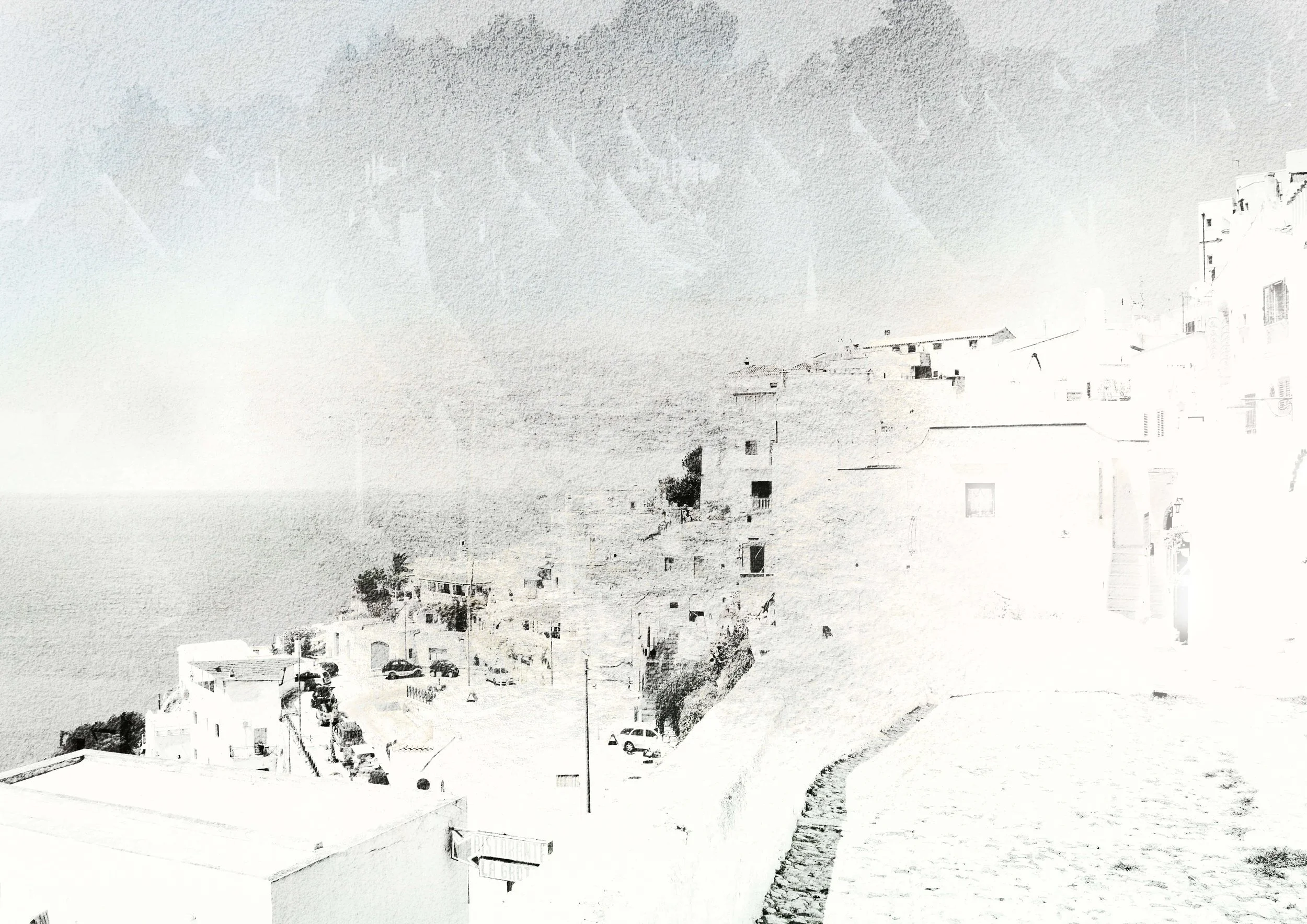
Puglia appears twice: one city dissolving into white, another suspended above it. The same place occupies two states at once, leaving uncertain which belongs to reality and which remains elsewhere.
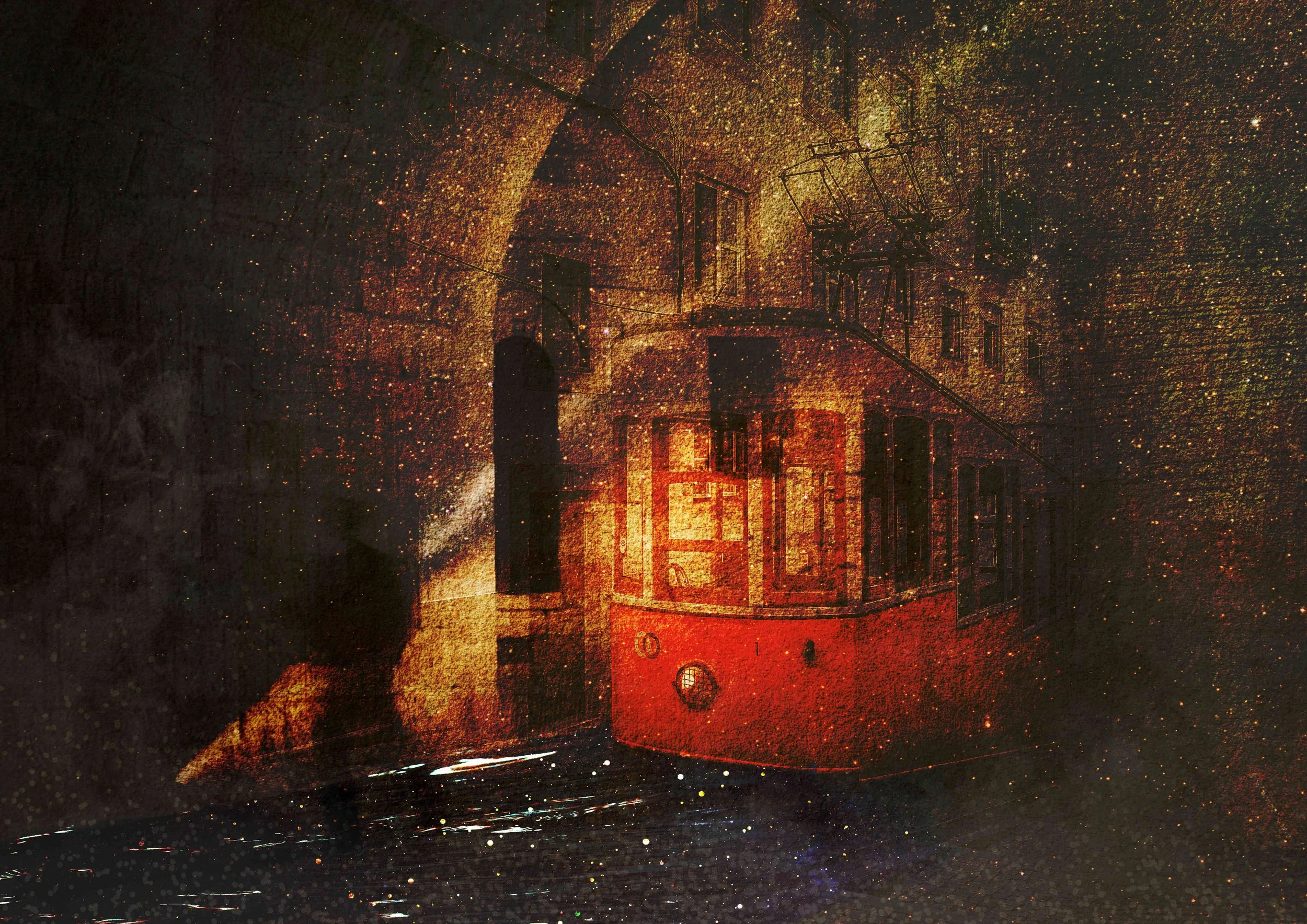
On a Lisbon street, a tram approaches a tunnel that turns its route into a passage between worlds. A shadowy figure leads it, so it moves slowly. Beyond the entrance, neither the tram nor its passengers know their destination.
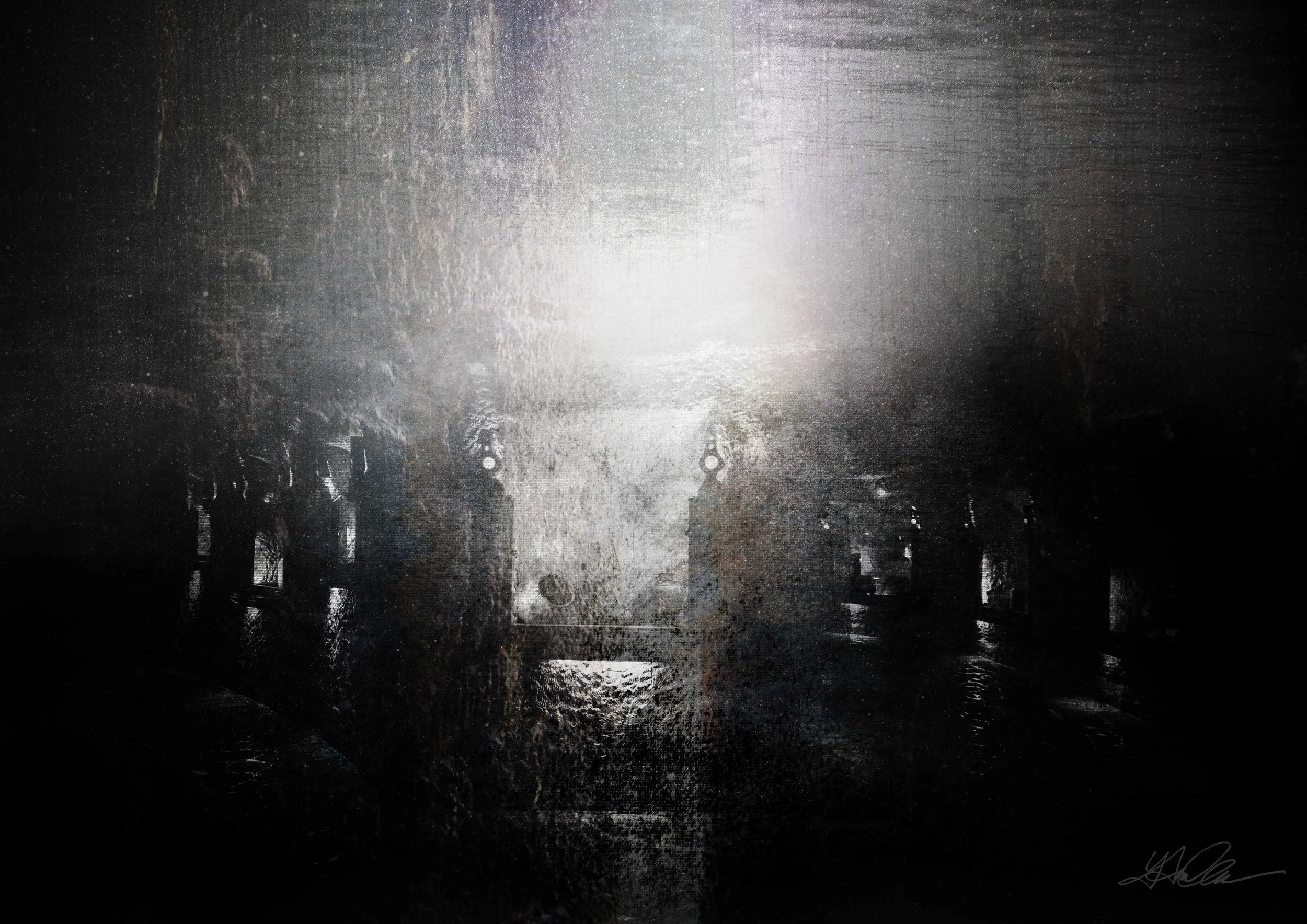
Surface light penetrates slowly beneath the earth, passing through matter until it reaches the depths. There, it rebounds, illuminating the underground from within and revealing a hidden continuity between worlds.
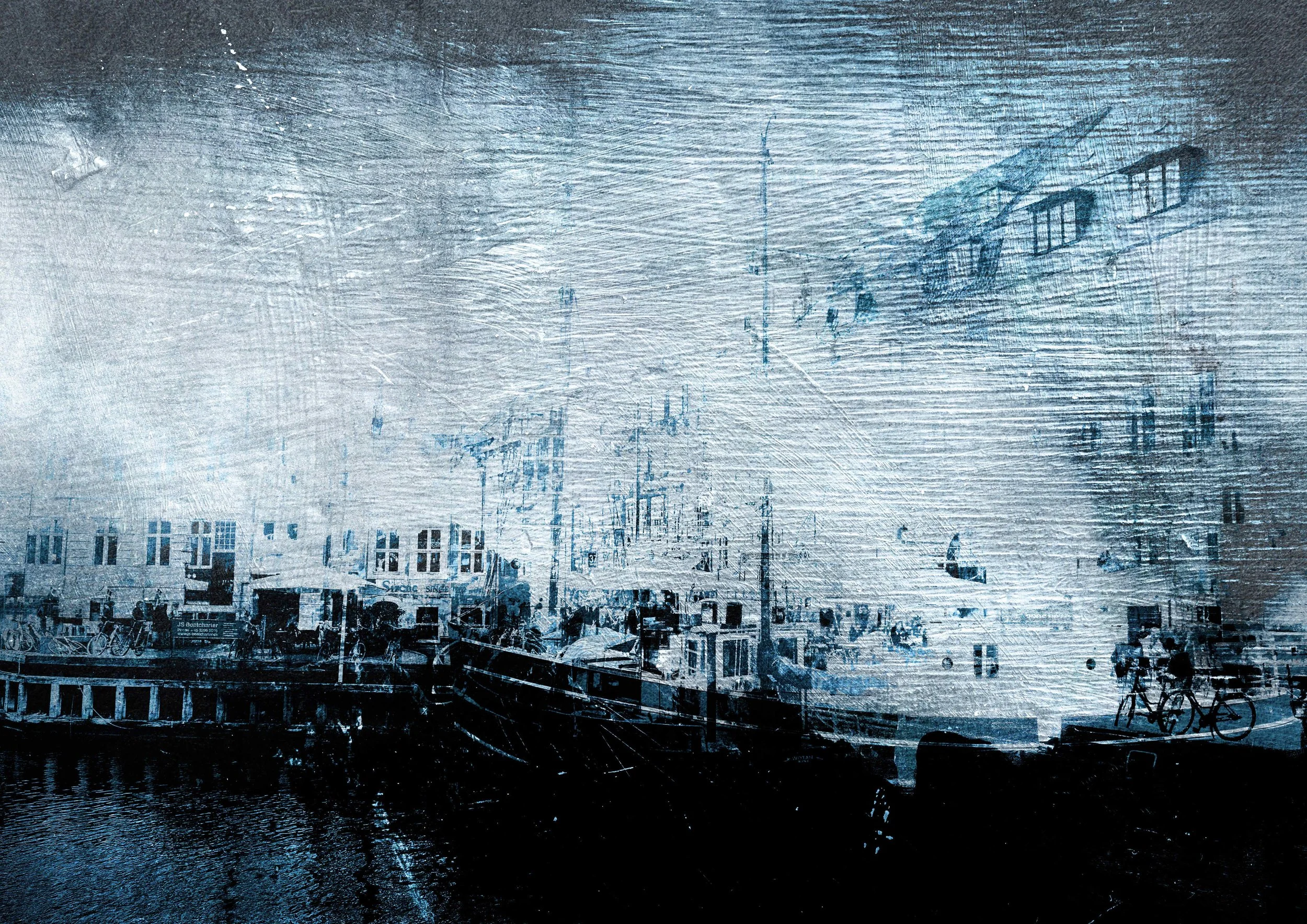
Memory preserves places unevenly. Older images fade as newer memories overwrite them. In Copenhagen, the harbor remains visible beneath erasure, texture, and newer layers of memory entering across the surface.
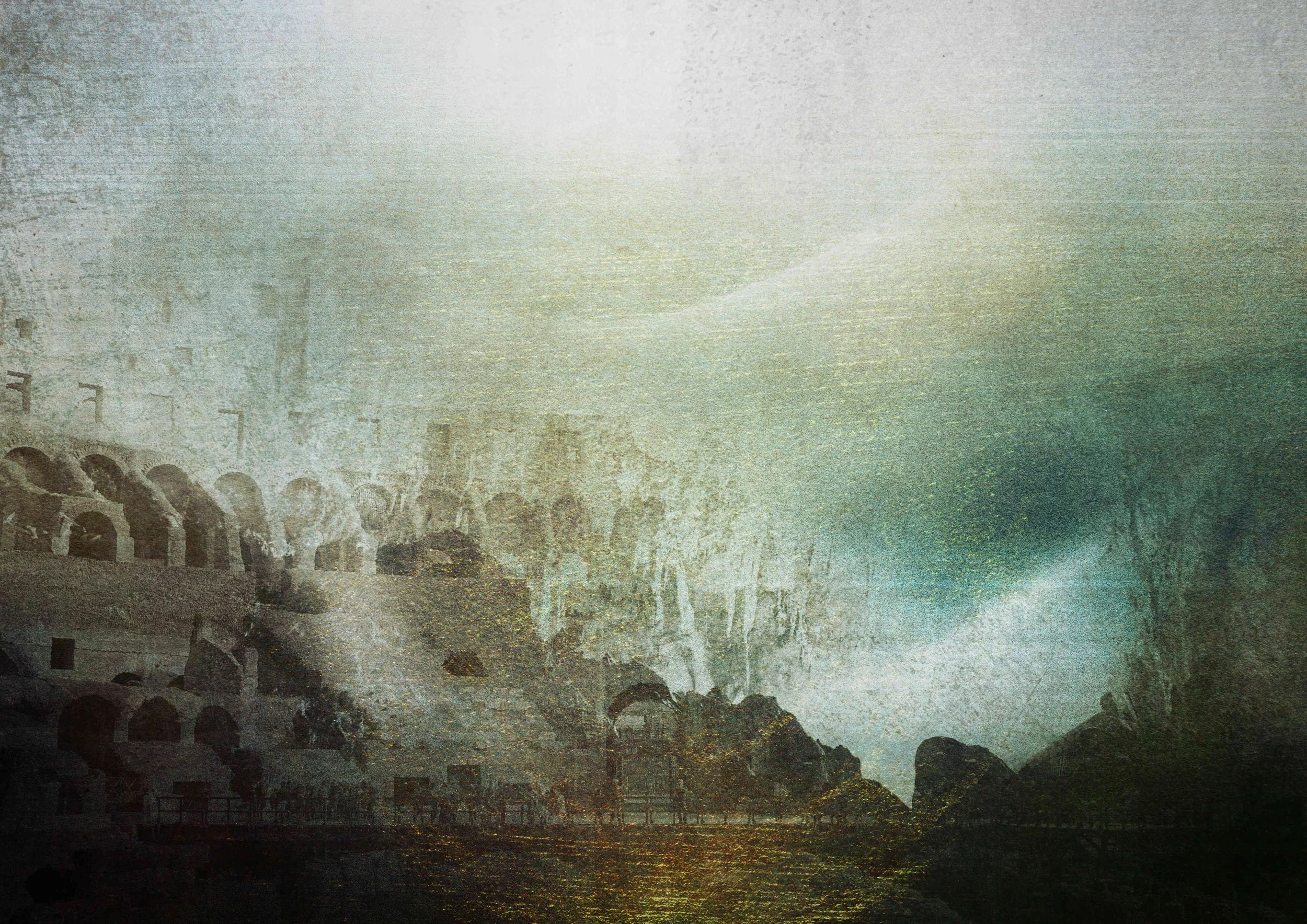
A structure built from stone gradually loses its form over time, returning to its original state as natural mineral matter. The work explores the moment when the boundary between architecture and geology begins to dissolve.
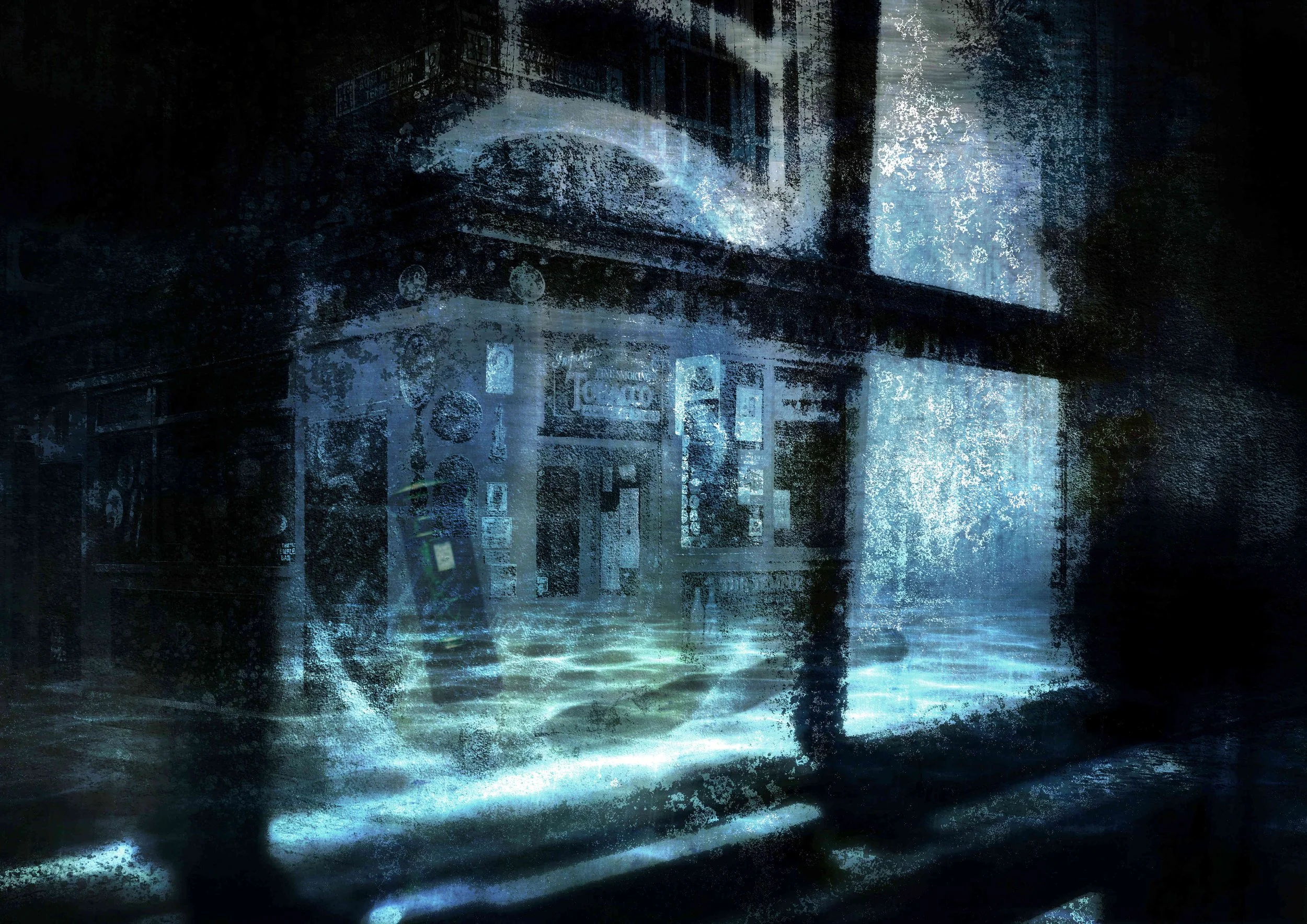
Dublin gathers incompatible spaces into one moment: street, interior, and seabed overlap as light or water descends. A Guinness barrel remains, ringed with light, anchoring the city within uncertainty itself.
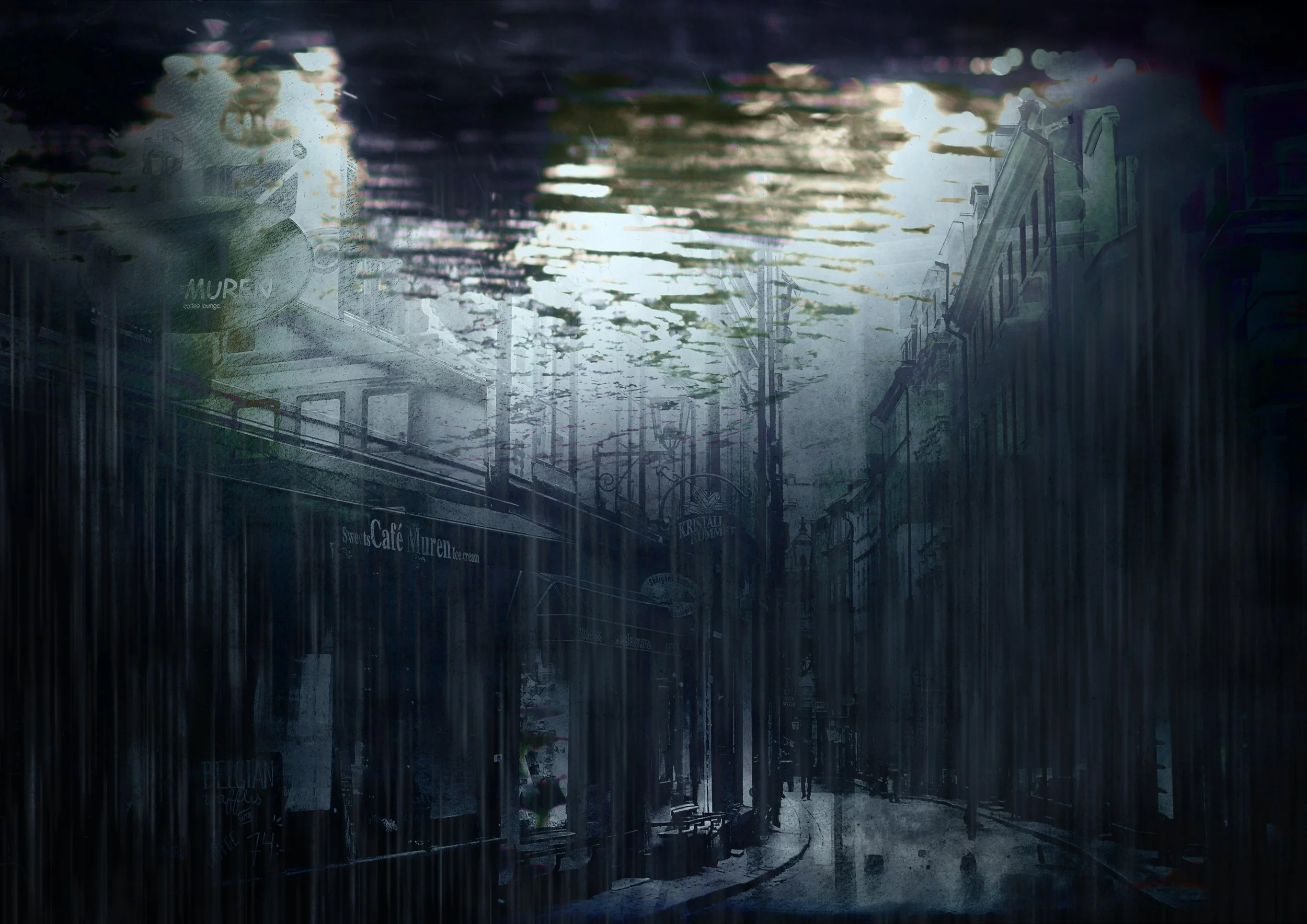
Stockholm’s urban memories peel away, revealing memories of another city beneath—perhaps from childhood. Familiar streets dissolve as deeper impressions emerge, like an older cortex exposed beneath the layers of the neocortex.
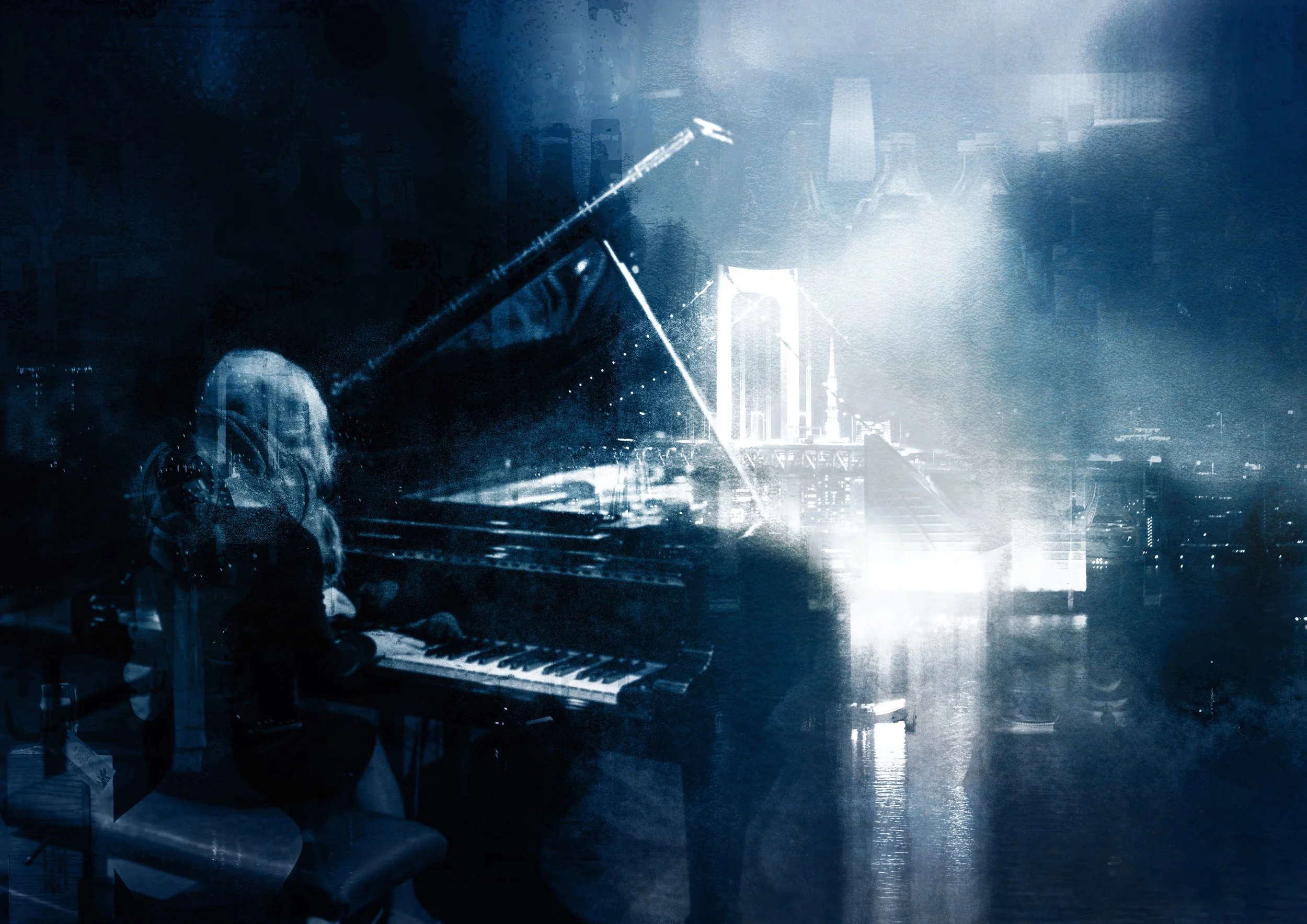
A female pianist and her grand piano merge with Tokyo’s illuminated skyline. City lights penetrate both the woman and her instrument, dissolving the boundary between physical reality and projected image. Even the invisible music seems to inhabit the architecture itself.
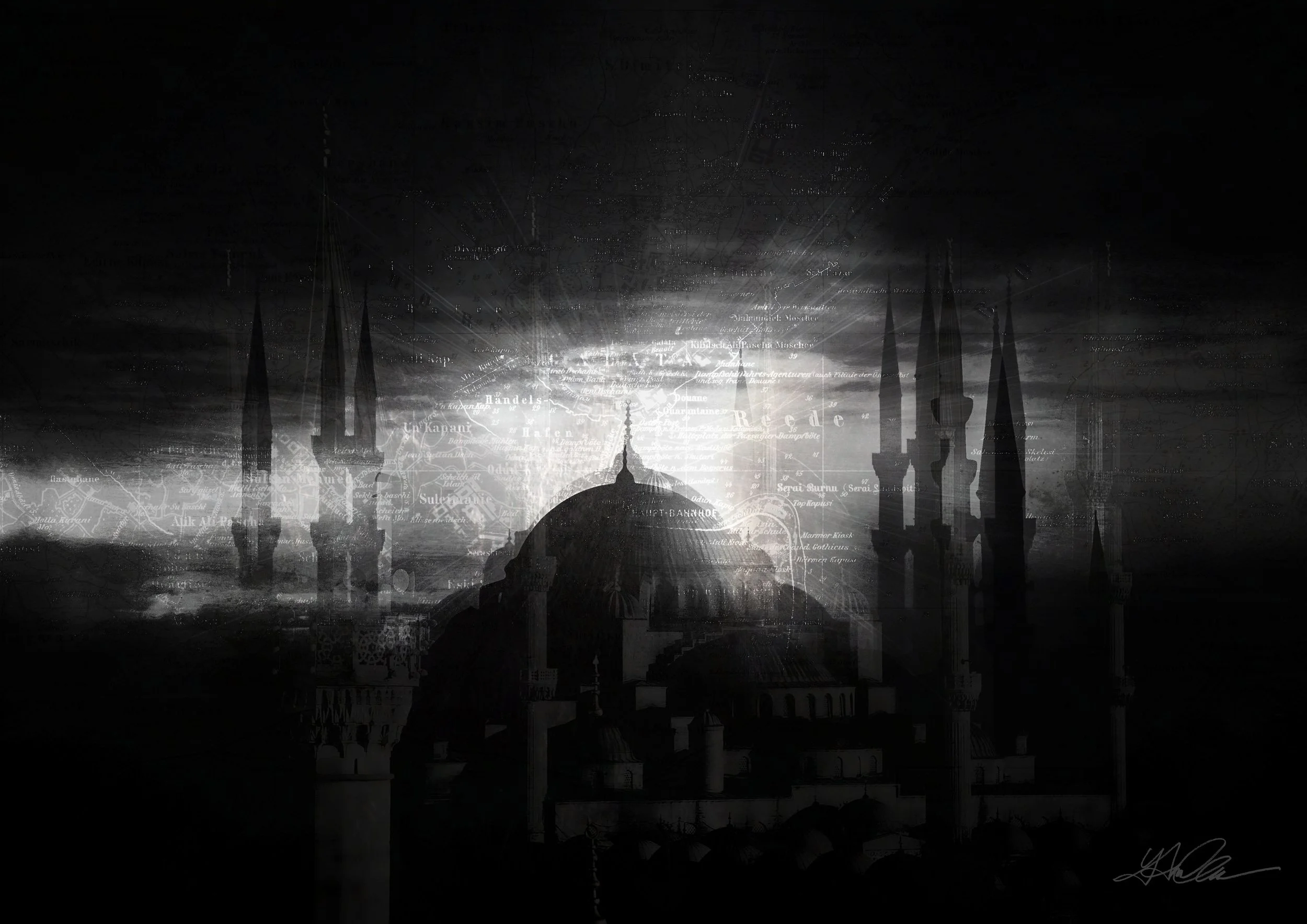
Istanbul projects itself into its sky, where the Bosphorus map merges with light. The projection then seeps back into the city’s silhouette, creating a reciprocal exchange between place and image.
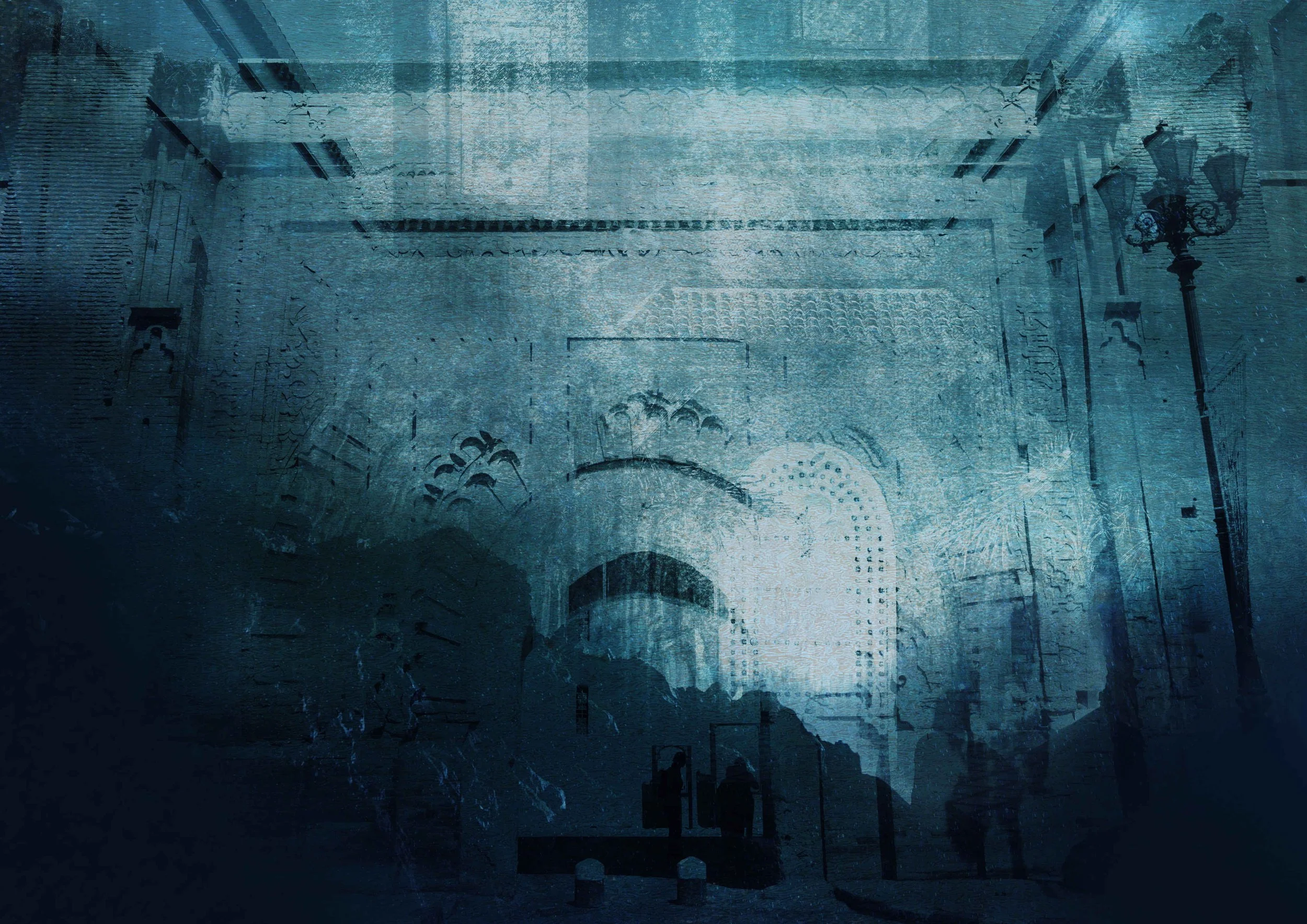
A sealed memory breaks open, revealing Marrakech. The door, once most vividly remembered, emerges clearly, while the surrounding city fades gradually as memory weakens toward the edges into darkness again.
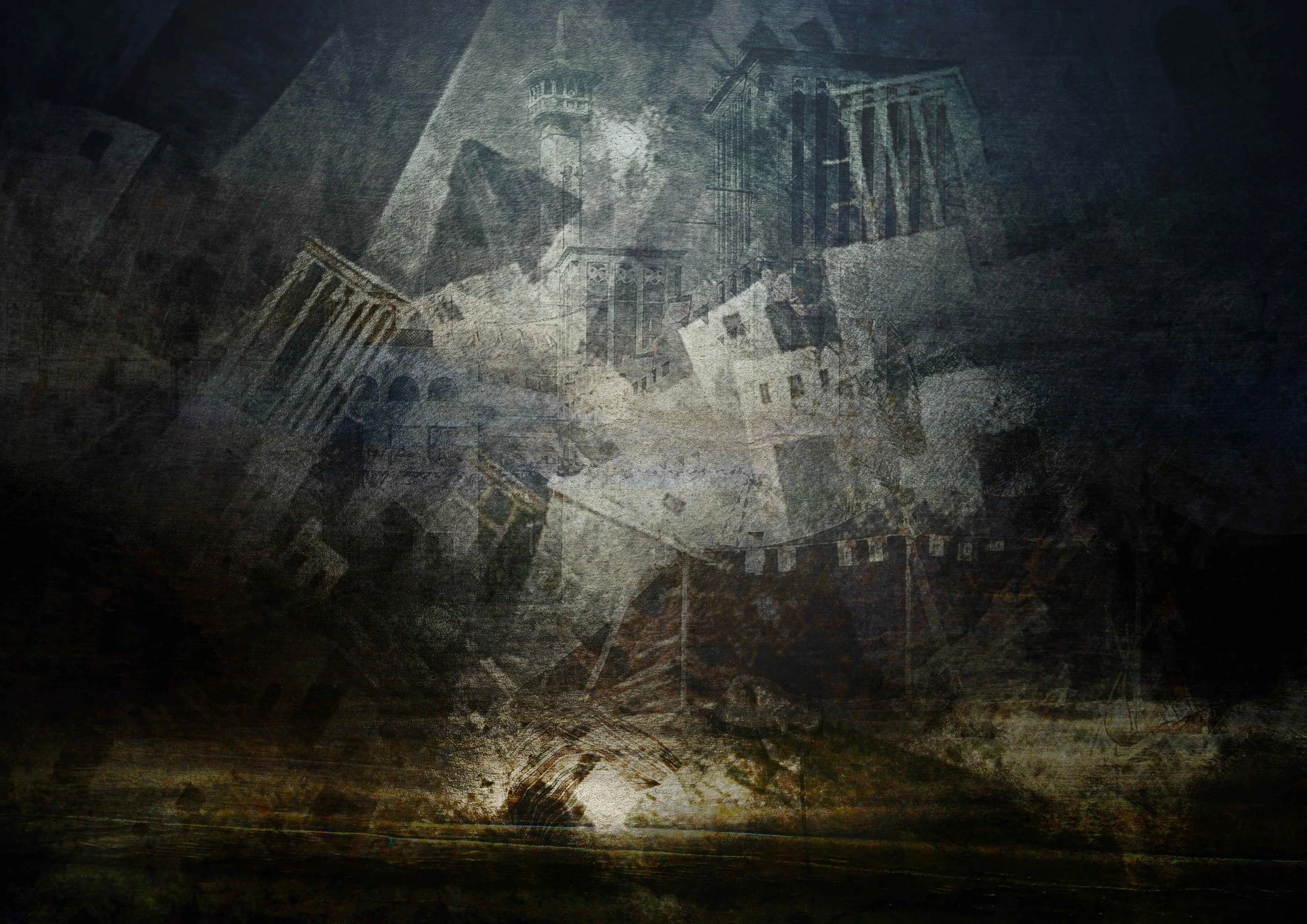
Dubai’s preserved wind towers emerge through an image of their own destruction, bringing together the city that survived and the future that might have existed had Al Bastakiya disappeared forever.
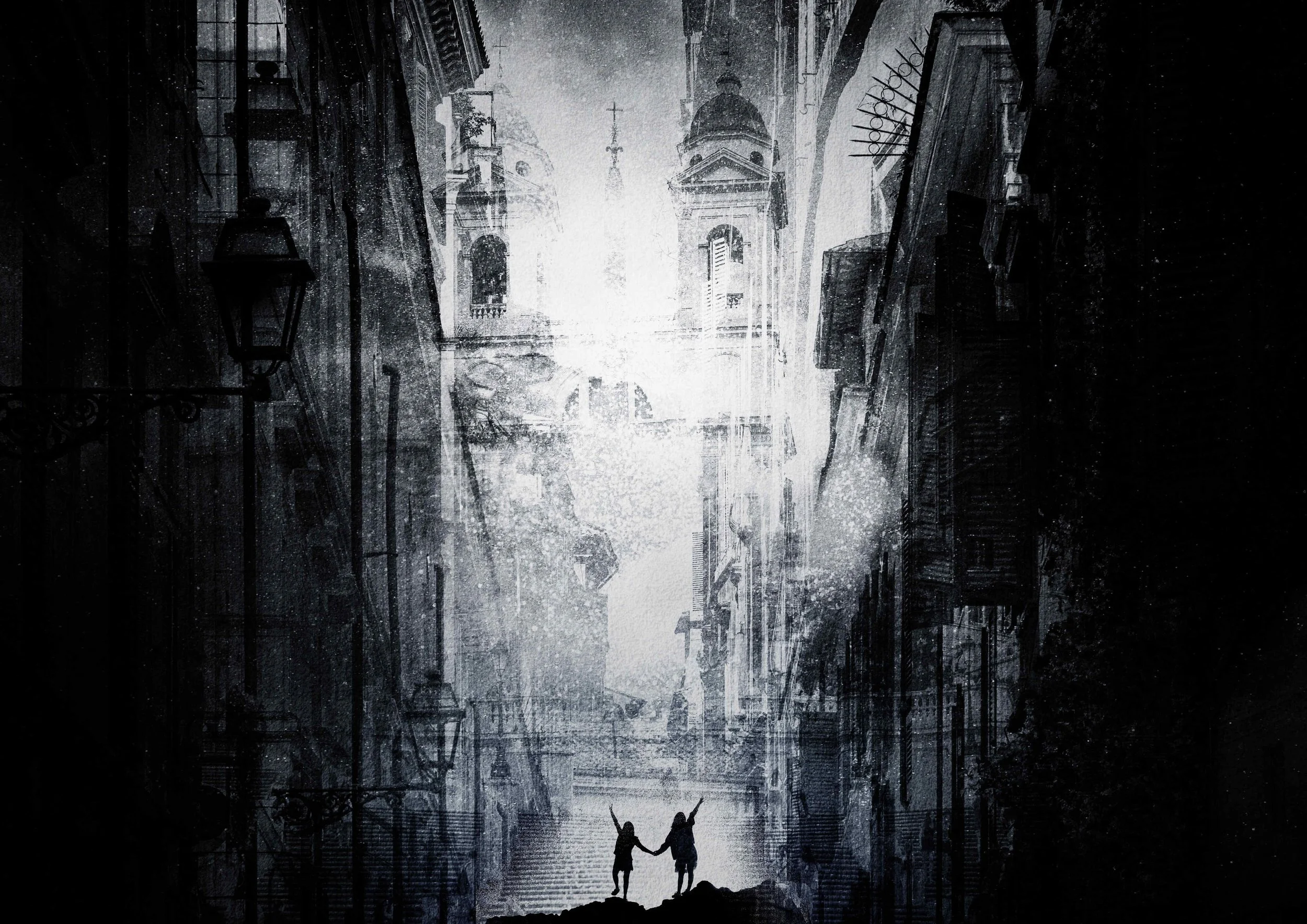
The Spanish Steps and residential streets overlap in memory, not erasing one another but merging into a single unstable space where separate places coexist together and become something newly remembered.
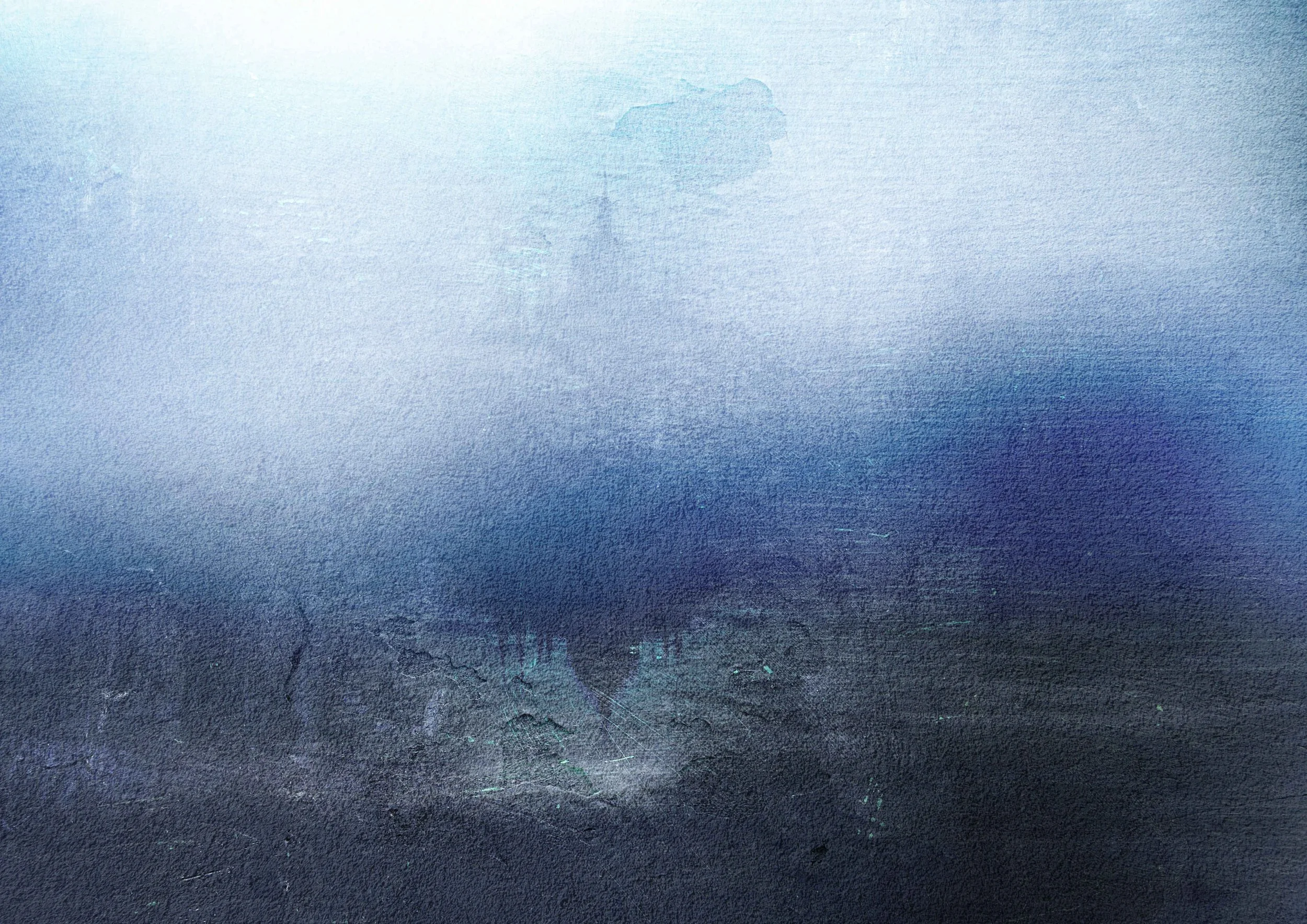
Budapest stands between advancing night and resisting daylight. Darkness rises from the Danube as pale blue light descends over the skyline. The city gradually loses its familiar outlines, becoming a fleeting apparition within the shifting fields of light and darkness, capturing the fragile moment when day and night coexist, neither yet prevailing.
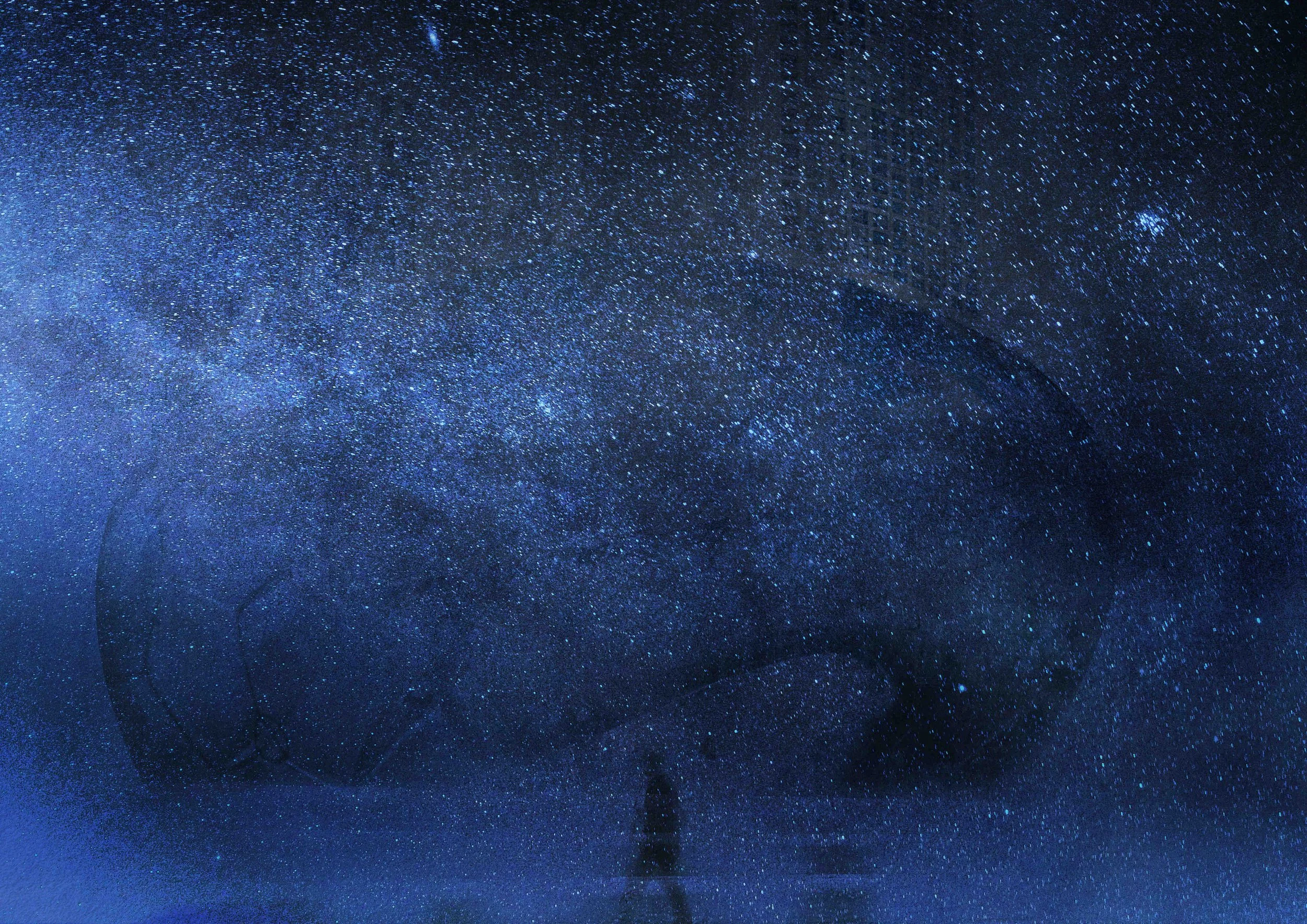
Chicago’s skyscrapers vanish, replaced by the universe itself. At that instant, the Bean begins to breathe, as though something alive were being born. Science fiction in our reality, perhaps; in a parallel world following a slightly different timeline, why not?
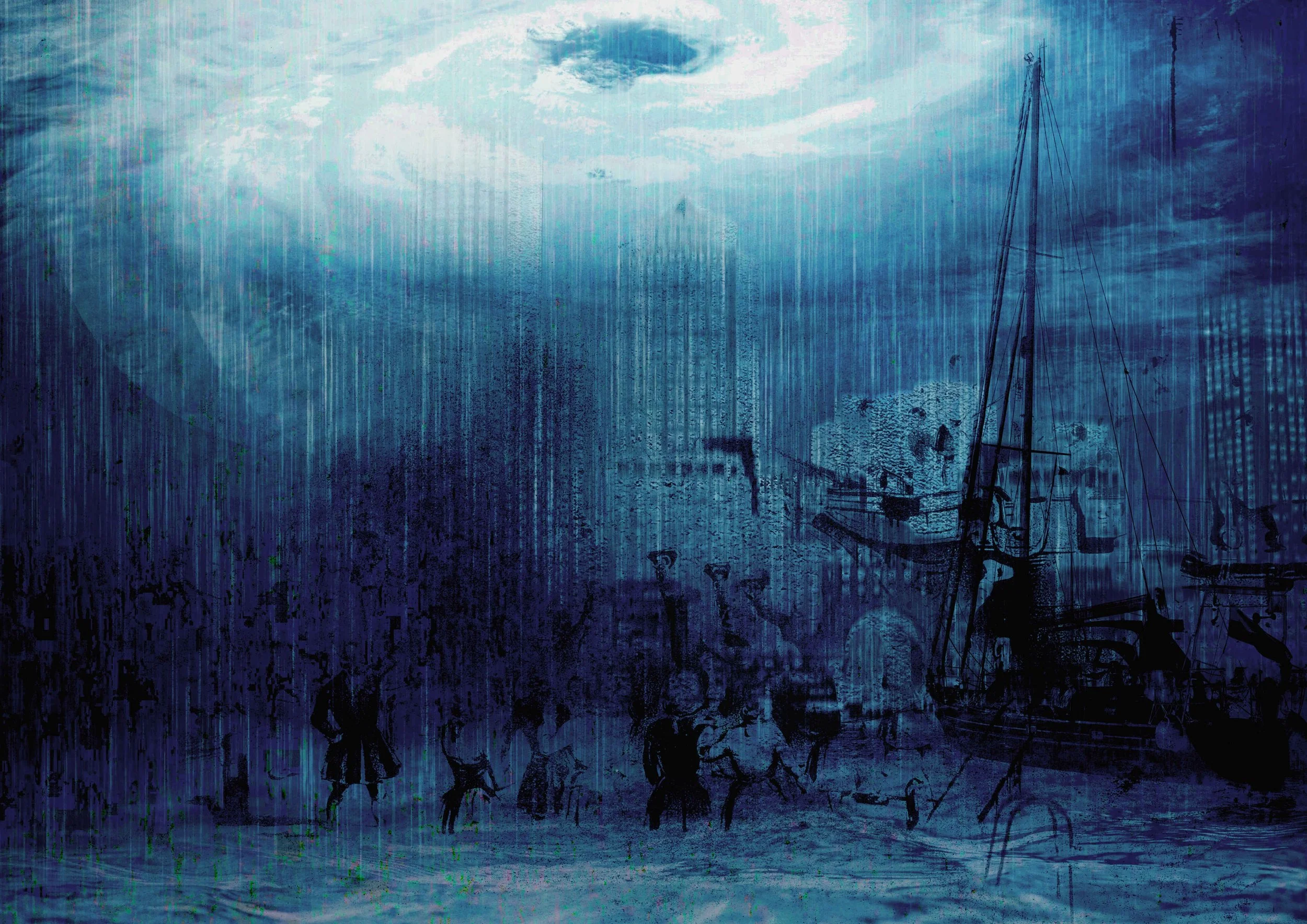
In present-day Boston, the Tea Party returns as a ghostly recurrence. On a rainy evening, under a turbulent sky lit from above, spectral rebels gather at the harbor, repeating their defiance as history breaches time and invades the modern world.
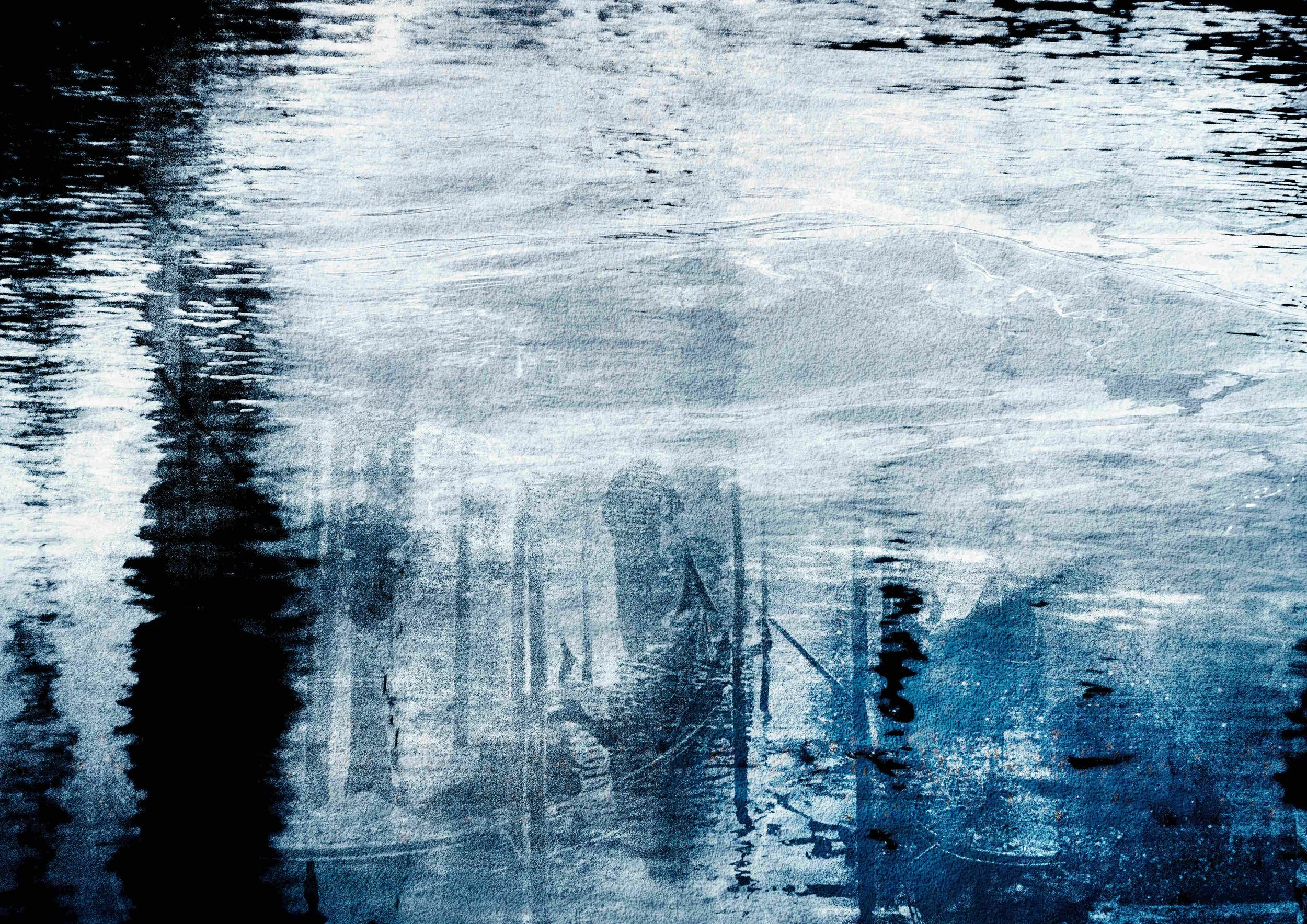
Venice emerges through the memories of a gondolier who has traveled its canals for years. Fragments of architecture, water, and light overlap, dissolving fixed perspectives. The city survives not as a single view, but as accumulated impressions shaped by time.