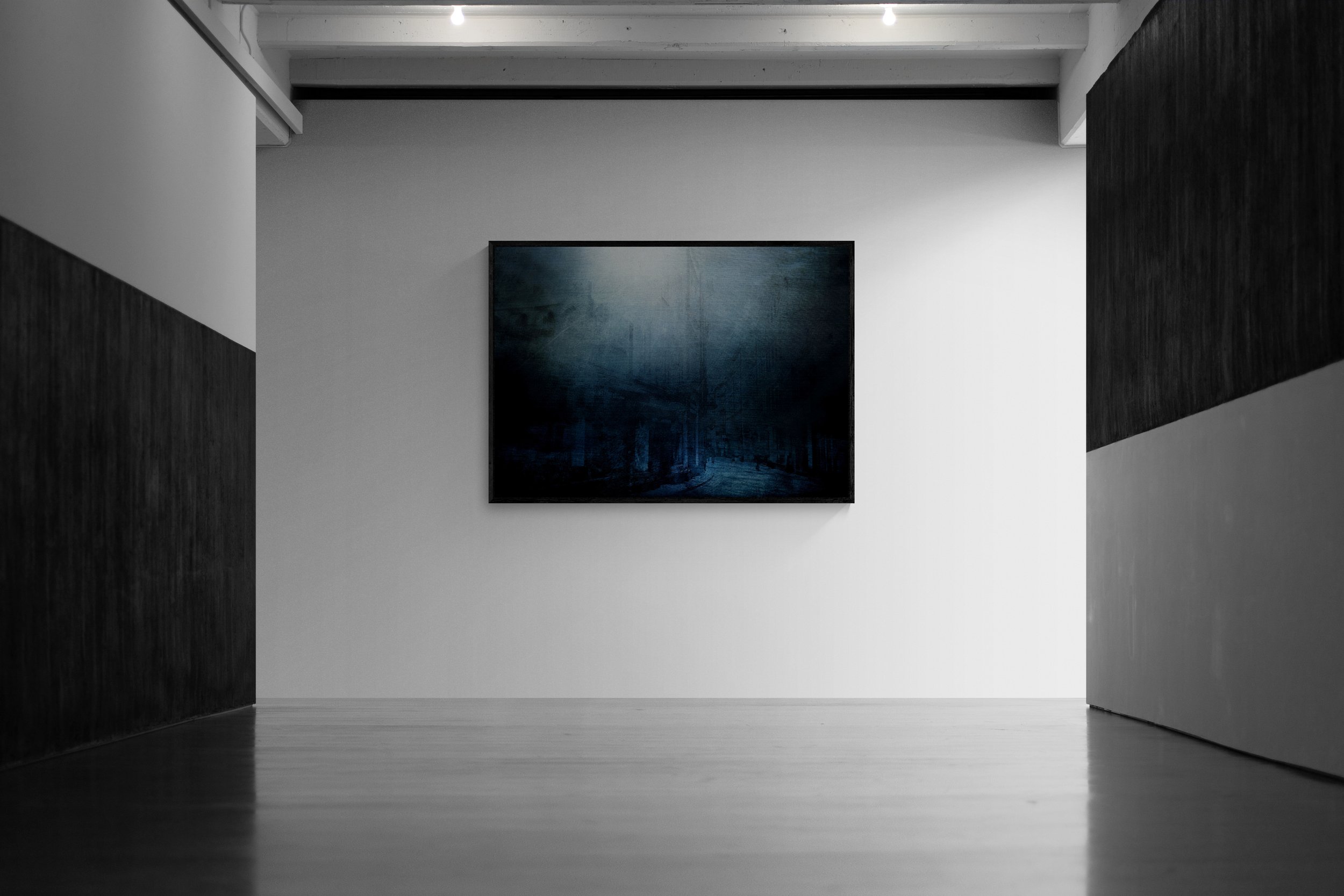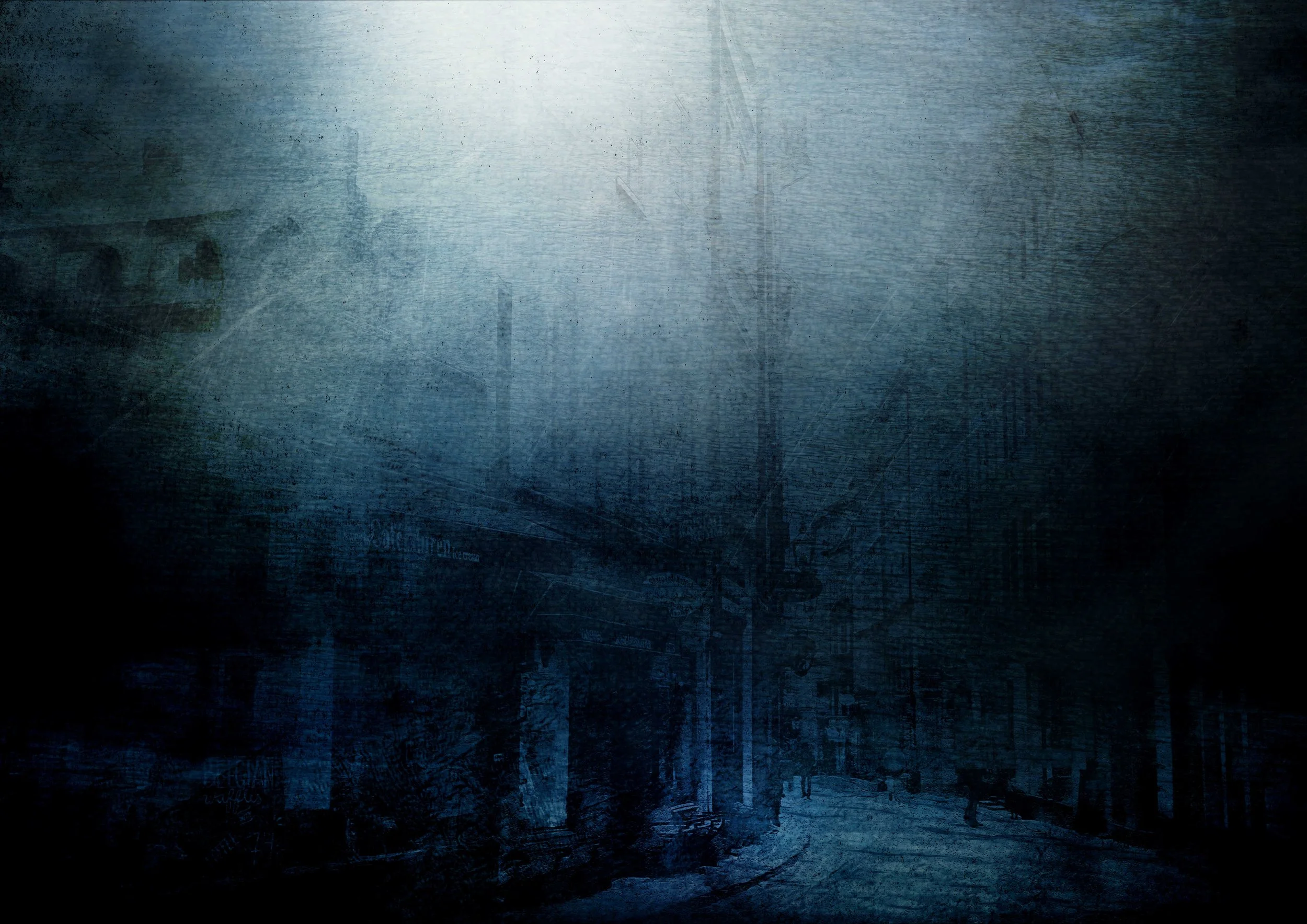
Stockholm
Stockholm survives as a layered memory rather than a continuous city. Fragments of cafés, signs, façades, and narrow streets remain recognizable, but they no longer occupy a stable spatial order.
Warm yellows, ochres, and muted greens spread through the image, dissolving architecture into light and surface. What once belonged to separate moments begins to overlap. A street, a wall, a sign, a passing impression appear together, not because they existed at the same instant, but because memory has compressed them into one field.
The city is still identifiable, yet its physical structure has begun to loosen. Perspective weakens, distances become uncertain, and surfaces carry traces of different times at once.
Stockholm remains neither as a record nor as a reconstructed scene. It persists as an accumulation of visual fragments, where place is held together by memory after chronological order and exact location have started to disappear.