Venice
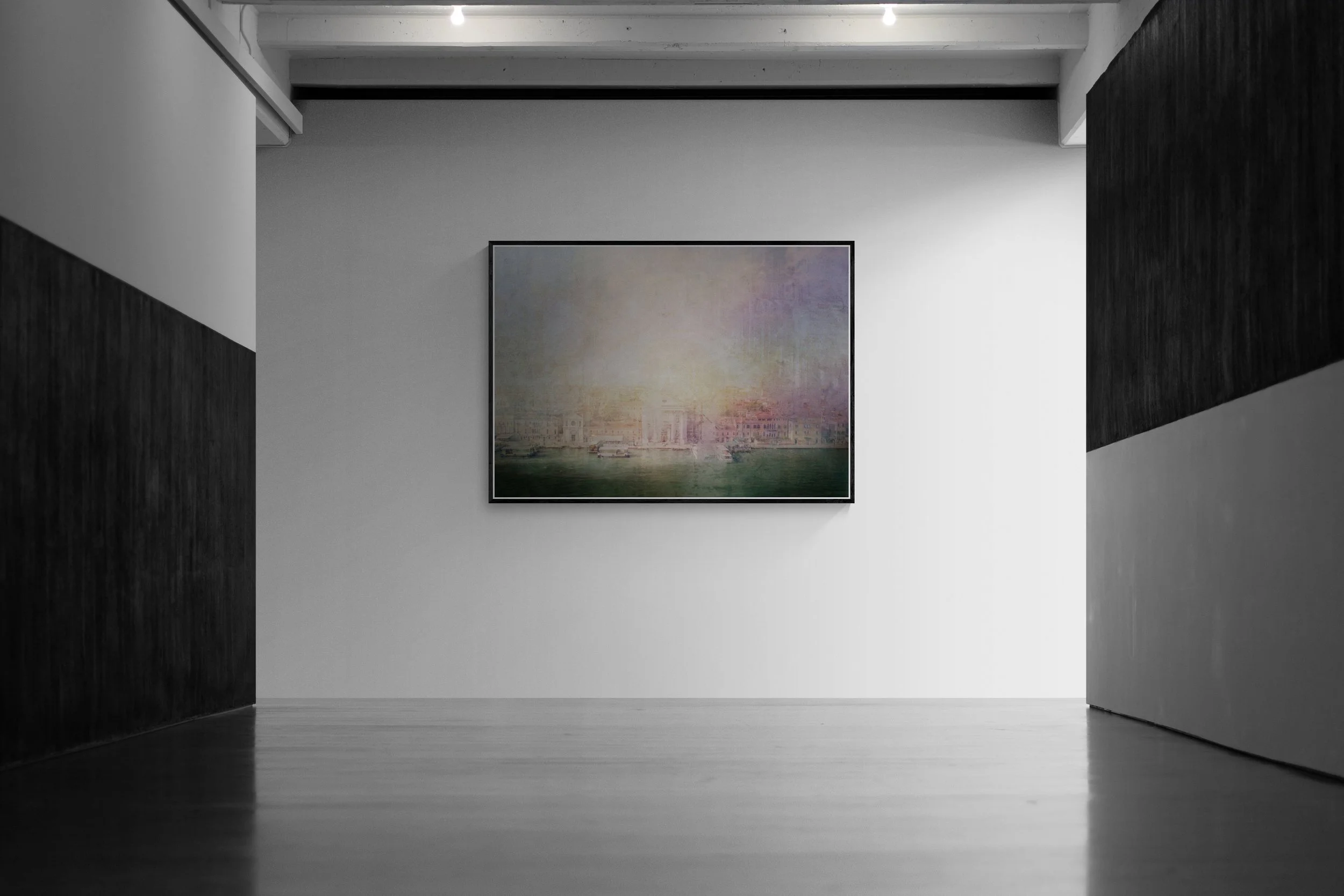
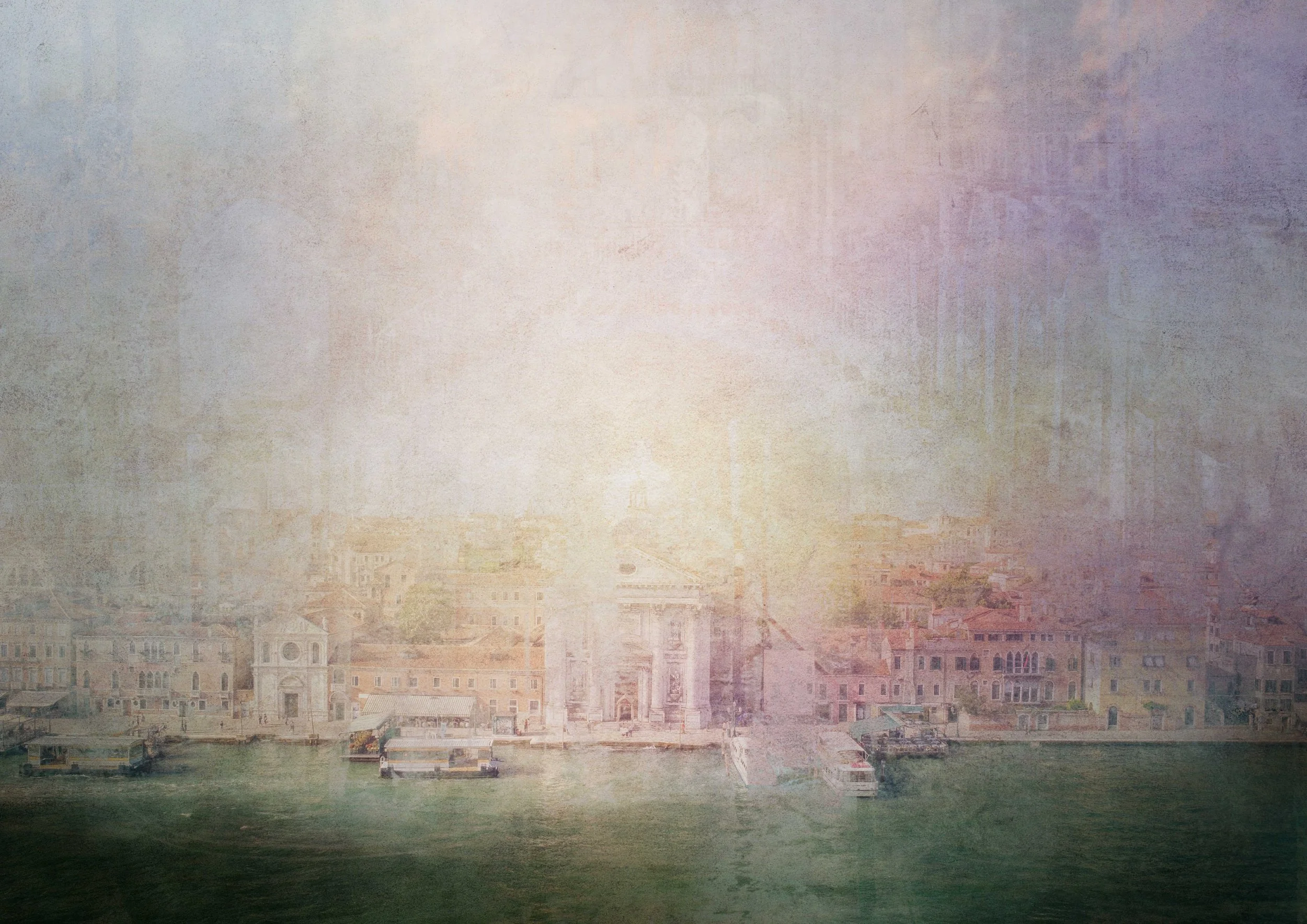
Venice appears here not as a single view, but as a city reconstructed through overlapping fragments of memory. Canals, bridges, waterfront architecture, churches, and boats occupy different spatial positions, yet gradually dissolve into one continuous field.
The upper layers retain the intimacy of narrow passages and arched bridges, while the lower city opens toward the lagoon. These contrasting scales are not separated. They merge, allowing distant and immediate impressions to exist at the same time, as they often do in memory.
Color remains subdued, and architectural details emerge only partially before fading again into light, water, and atmosphere. The city is therefore neither fully stable nor entirely lost. It survives through fragments that overlap, soften, and transform one another.
Rather than presenting Venice as a fixed destination, the work treats the city as an accumulation of remembered spaces, where separate moments fuse into a single, suspended experience of place itself.