Kiyomizu
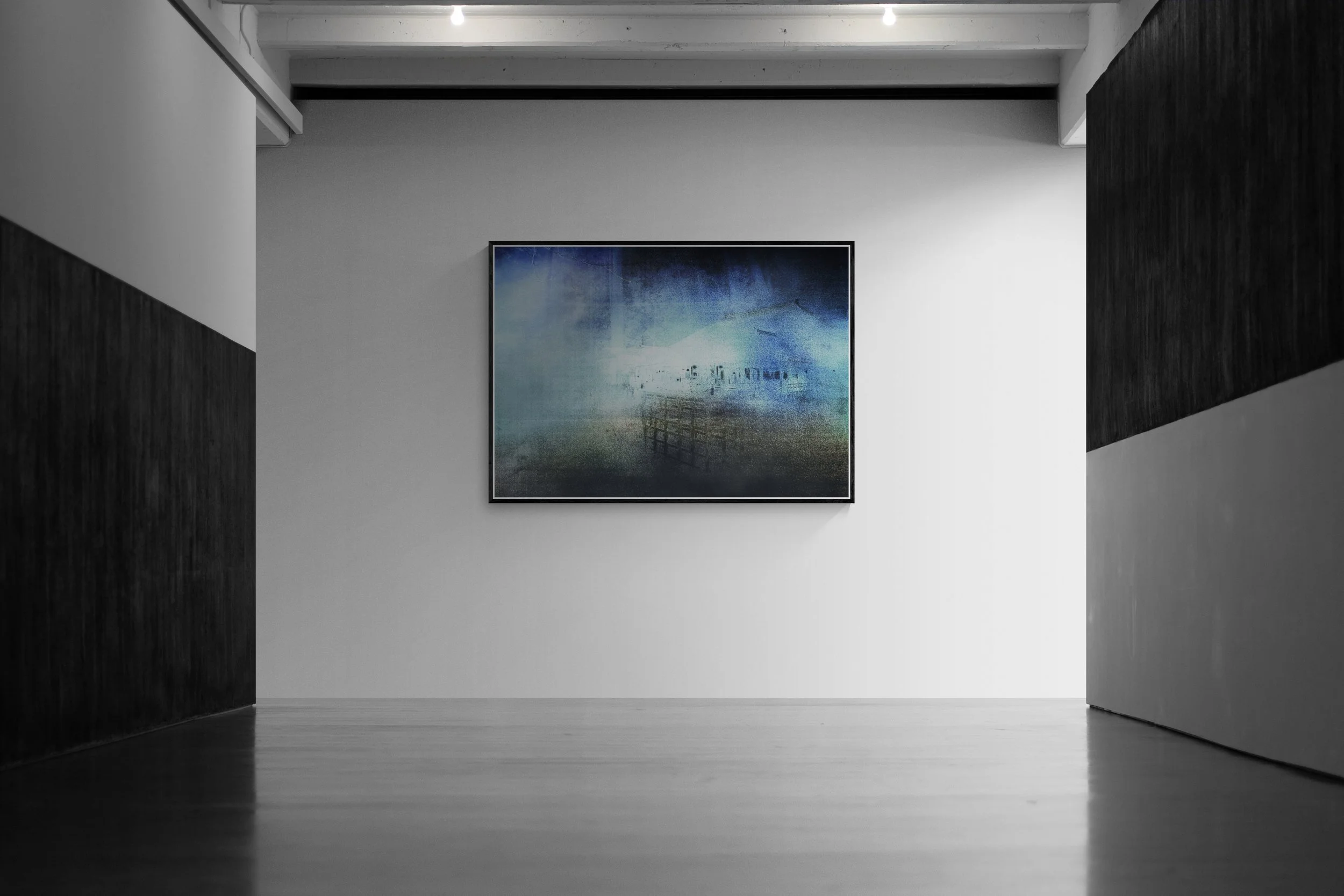
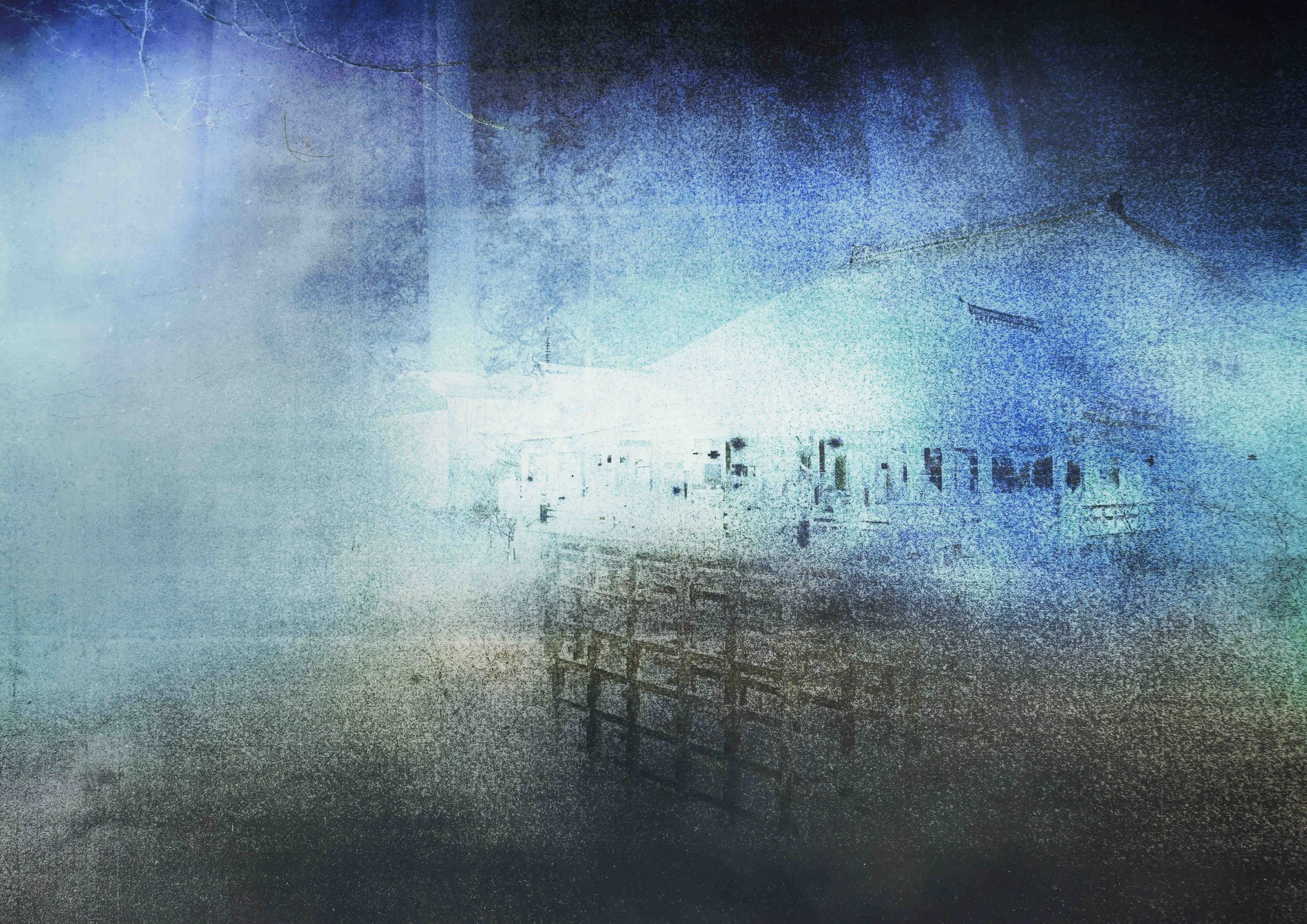
Kiyomizu presents the temple as a monumental structure suspended within pale blue and gray layers, yet deliberately places it within the intimate scale of a bamboo grove. This mismatch of scale unsettles ordinary distance and proportion, allowing architecture and nature to occupy an impossible shared space.
The wooden framework remains visible, but ground, sky, mist, bamboo, and building gradually lose their separate spatial identities. The temple seems to emerge and recede within the surface, held temporarily by light, memory, and material texture rather than by a fixed location.
Within Mineral City, Kiyomizu explores the threshold between recognition and disappearance through this deliberate spatial dislocation. The familiar temple remains identifiable, yet its monumental presence is compressed into an enveloping environment. What remains is neither a record of the actual site nor a purely imagined landscape, but a suspended state in which scale, place, architecture, and nature merge into one unstable field.