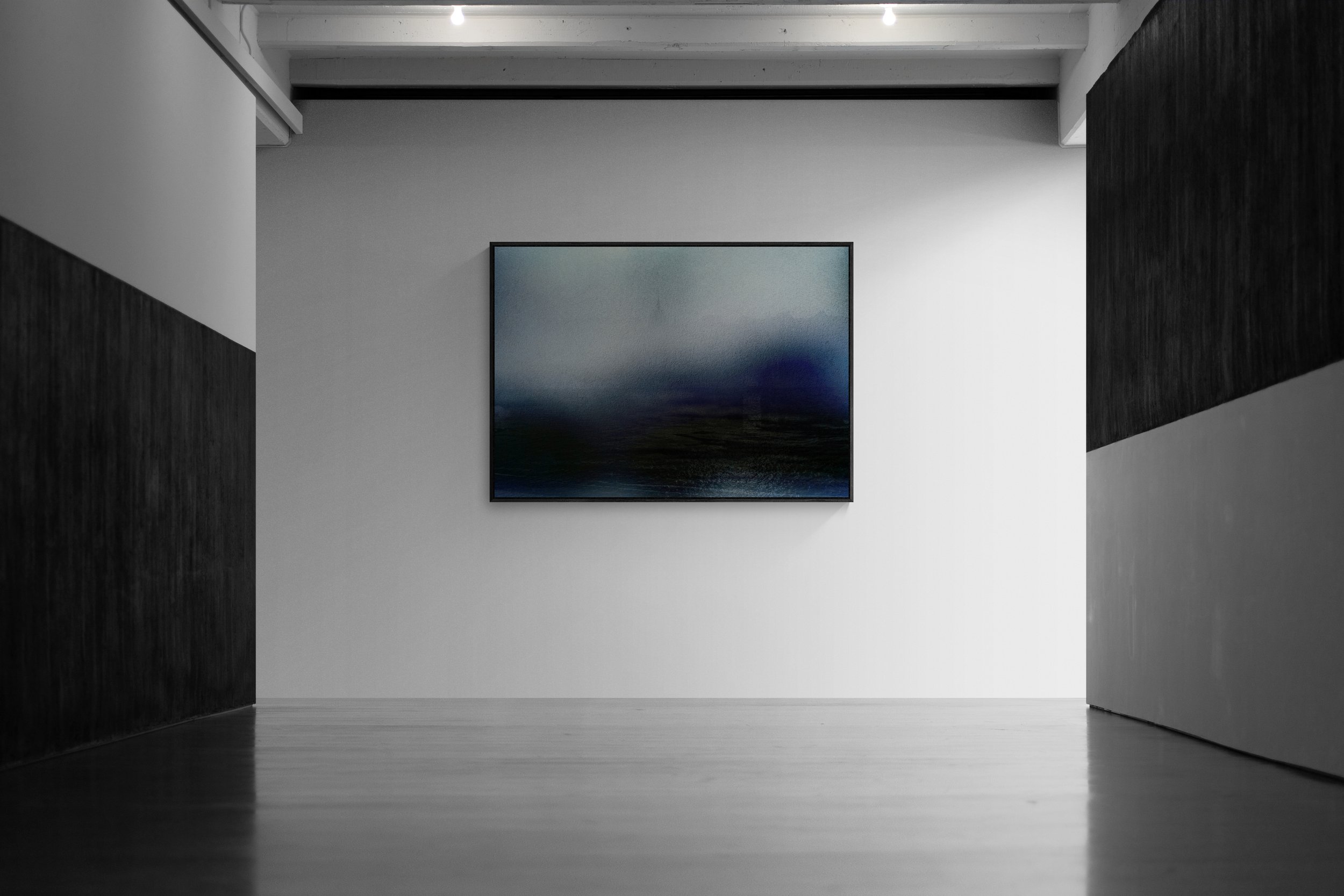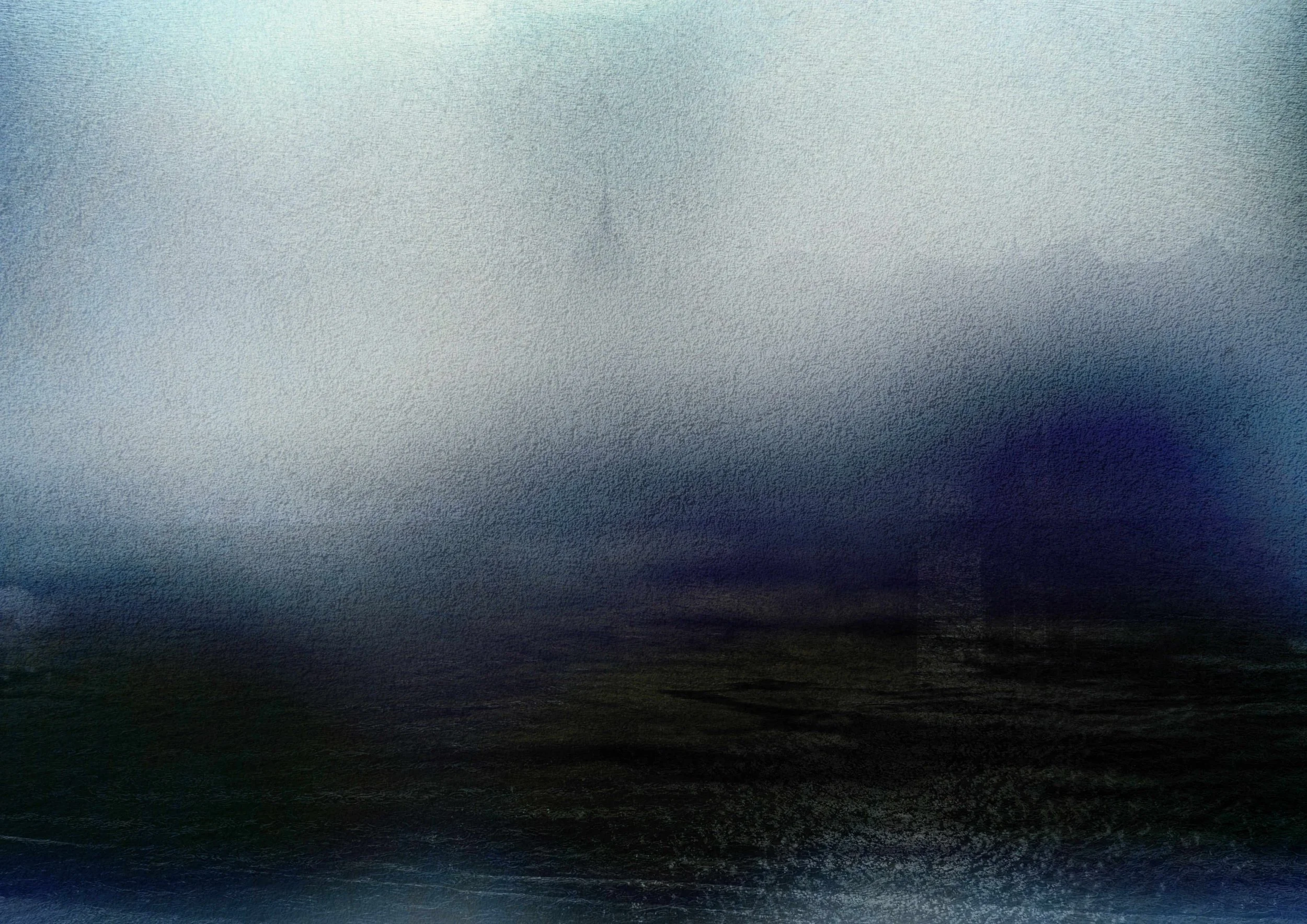
Budapest
Budapest stands at the boundary between day and night, but the transition is not a gradual fading of light. Darkness rises from the river and spreads across the city, while a pale blue luminosity presses downward from above. Between them, the distant skyline appears and disappears, its towers reduced to faint silhouettes within a shifting field.
The boundary moves diagonally through the image, as though night were advancing while daylight resists its arrival. River, sky, and architecture lose their familiar outlines, and the city is no longer held together by stable spatial relations. Instead, Budapest emerges as a fragile apparition suspended between opposing forces of light and darkness.
Neither force occupies a secure territory. The pale upper field and the dark lower field meet in a tense equilibrium, dissolving the solidity of the landscape. The city remains visible, yet only barely, as though its substance were being absorbed into the movement between the two states.
The work holds a moment suspended between two worlds. Day has not yet surrendered, and night has not yet claimed the city. Budapest appears both present and elusive, caught in a moment that is already disappearing.